Monday, May 16, 2011

The ground floor up: Coming up thru the ranks.


The ground floor up: Coming up thru the ranks.


As the assistant to the Chief instructor I get a lot of questions when I travel around and teach. One of the most interesting ones I get has to do with rank. Now I have been part of hundreds of testing’s over the years and I can tell you that no two people are built alike and no two people look the same for testing. Any instructor who says that every student they test must look the same at for the ranking as the next guy is full of beans. For instance, a lady in her 60s who is testing for purple belt will look yards different than her granddaughter testing for the same rank! And again anyone that says that you need to look like the next person when testing…full of beans!


So, are their key components that we look at that you have to meet…..well Yes! And there are specific attitudes as well! Some of the best advice I can give each student is to train as hard as you can and try to learn the best you can, and we will judge and teach you what you need to be at a specific level at a specific time. But if you are looking for some road markers for yourself….well here are my thoughts on each rank and important mile stone up to black belt!


First off let me say that I am not going to say the Kata and type of Kumite you need to know, that is not what this is about. Its attitude and learning that you need to do to be at that level. Each level represents an attitude in training and an level of mastery that you need to understand to be able to move on from that level to the next. And to be frank….often a person’s rank in Karate exceeds the level that they SHOULD Be at…in other words… I know of a few people that have attained rank that might not suit their current knowledge base!


9 Kyu: White belt


Come in the door, know nothing and remember that. The worst thing that a person can do is come into a Dojo and bring with them their old baggage with them. I have seen so many TKD guys try and take a class in Karate and forget that they are not in TKD anymore. The skills may be similar but if you are not open to learning…you generally will do a poor job of it…even if the instructor tries really hard! No nothing and be proud of it!!


6 Kyu: Green Belt


You just passed three tests and you are now an intermediate beginner in Karate. The most important thing you can do is practice hard and listen a lot. This is still a beginners rank, you however now understand some of the basic components of Karate but you still have so very long to go! Remember that at Green belt your understanding of basics is getting better and you are now learning how to use your body properly for Karate.


It is at Green belt that most students drop out because they feel they should know more than they do. Do not panic, at Green belt the amount you don’t know will seem over whelming and black belt will seem so far away. Its time to buckle down and really focus on just repetitions to hard wire your body to do the movements correctly and to build on your ability to use your body correctly. Also, some very hard theories are introduced thru your Kata. Start taking time to work on your own and truly get inside your own body.


4 Kyu: Purple belt


At purple belt you are now mastering a different set of ideas and transitioning into the Tekki Katas to learn even more about training. You should start to realize that much of what you are learning is all about how to train, not so much how to apply the techniques. There is a large difference between learning how to throw a kick and how to use a hand strike and when to use it and how to apply it. Purple belt is the last two levels of training on basic theory…From here on out you are done with the theory and you are into the application of basic principles.


3 Kyu: Brown belt


At third Kyu you start to learn a fighting Kata. Bassai dai and the senior level Kata are very different from the theory building Katas in that they should be done as if you are applying movements that are based on how to move in a fight. You still break down the basic movements and learn the moves and your kumite is now starting to get real. At this level you are starting to learn how to apply power to your techniques and you are beginning to learn how to “DO” Karate and not just learning the how to “Learn” Karate.


At 3rd kyu you are jumping light years ahead and it is often like learning a whole new art form, the physical aspect starts to scare off those that don’t realize that Karate is a physical art and really weed out those that want to pose as a Karate black belt and those that want to live as one. So many people physically stop testing themselves at this point and unfortunately many end up getting black belts who have not gotten past this level in real application.


Start to train for the first time, strapping on that brown belt know that it is really time to physically look at what you are doing and learn how to apply it to your training, not just figure out the theory behind a move, learn to do that technique in real application. Don’t be scared of what your Karate has become, embrace the real world application of Karate and begin to train in Karate application at the most basic level.


1 Kyu: Brown Belt


By this time a student should understand how to apply the movements of Kata and you should be all about power and application of techniques. Physically the style is not very controlled, its about power and to be honest, its were we expect people to get hurt the most in training. Brown belts getting ready for testing should be all about intent and spirit in training. I absolutely hate sparring with Brown belts at this level and also white belts. The one thing they share in common is the lack of control and the all or nothing of their techniques. But it is exactly what it should be. An overly controlled 1st kyu with little spirit shows that they don’t understand the process and are not ready for the next step.


A first kyu test should be exciting for instructors to watch. The brown belt should be in good shape and it should not be all about form and beauty, the testing is normally ugly and students that are testing for this level and who are testing for Shodan should be CRAZY in their spirited approach to Kumite. One of the best tests that I saw for Shodan had three major injuries (All noses) and the participants had to be dragged off of each other at one point because they were “Fighting” for their rank! It was controlled but it was a bit chaotic in the spirit and the power was not held back!


1 Dan: Black belt


So now you have your black belt…now what. Well If you are like 65% of the people out their you quit. That’s right, you take all that hard work and fold up your tent and throw it away as you leave. Its really actually very sad, you have trained for three to five years and now you think you are done….but wait, what about the other 45% of the people…well you get to realize that your training for the last five years has opened up a big vault of knowledge that you can now swim around in like Scrooge McDuck in his gold vault! You get to work with new concepts and dig deeper into your own knowledge and start to form your own Karate. Before this you were just getting ready mentally and physically to take that first step…but now you are there on the first step of the true journey!


You will begin to bridal that passion and power and learn true control, distance and application of techniques. You will recognize your weaknesses and spend a life time learning how to over come them. And more importantly you will be able to really focus on building up your true knowledge of Karate by exploring different advanced Kata and pushing to find new hidden lessons in them.


This is not a time to throw in the towel, you are just starting to understand Kumite and at this level you will get to focus on it as you build up your knowledge base and begin to train in communication Karate style…Kumite! Your body will begin to make more sense to you and you will be over the little hick ups called coordination!


Unlike what many people think, and what a lot of senior instructors in the world try and make people think…black belt does not mean you have mastered anything other than knowing your basics. A black belt is simply the first step in a long road of discovery and practice and unfortunately many people start this journey with an end in mind…that is the wrong way to start this venture. Look not at the destination but at the process itself. Don’t be focused so much on the end, because the effort is what you need to be watching. If you manage to stay around long enough and get your black belt, all that effort that you ended up putting in to get that belt would be a loss if you stopped training now.


For me to vote for a person to be eligible to test for black belt, the previous hard work must be there and also I must see that they understand that this is only the beginning of the true training.


Anyways, I hope this helped if not to just remind those that are training, to train hard…don’t give in…don’t give up and remember that when you get to the end…its only the beginning with a twist!

Who owns your Karate?


Who owns your Karate?


Many moons ago I met a lady who trained at a local club, and Ironically had been presented with a chance to take over my old Dojo at a community club. She was very pleasant and her Karate was not bad, she lacked some physical ability but she sure made up with it by having a big heart. From what I gathered she knew little more than the curriculum to get a student to purple belt and perhaps what she needed to get her Shodan, but she was never asked to learn anything more than that.


She took one of my classes and said she had her eyes opened up a bit, she had never been pushed so hard in a class, and when I told her that was a standard class she was shocked! Her current Sensei, a man I had trained with many years ago, never taught classes like that. She also could not answer some very basic questions about Karate, and to be frank…her ability to do kumite was very lacking.


I wrote to her on line a bunch of times and found out that she was not training with her instructor at the old Shotokan club and teaching but she had also picked up training with a Kyokushin club. She explained that because of politics she could not train with me or my instructor anymore. And while she was stuck between wanting to learn how to defend herself and not wanting to tick off her instructor, she found the next best thing…she was going outside of her style to learn how to do Kumite.


As time went on she had issues with the instructor because he figured out she was not happy with his style of teaching. She also wanted to leave teaching as she felt like a fraud teaching a fighting art when she was not able to do basic Semi Free sparring with any kind of skill. Now, this is were it gets good…..She stopped teaching at the community club and started training with the instructor and her new club to the point that her instructor got very upset with her..She told him why she was cross training and he blew up at her. She left a week later when her new instructor at the Kyokushin group invited her to train as more than a drop in!


She walked away from being a Shodan and strapped on a white belt and started all over again…but training in something she liked better than the Shotokan dojo. She left his club of her own free will and this is where it gets weird……he sent her a letter, one that he printed out and signed that told her she was no longer an Shodan, an instructor or member of the organization. Now having said that he ripped her for not being loyal, for leaving her students without an instructor and for what he felt was a breach of some kind of moral code! I happen to know he did this without the permission of the organization or without his senior’s thoughts on the situation.


The lady was devastated, she did not worry about the ranking as she had moved on in her mind but his words were hurtful and he really was acting childish. She was upset that she had spent so much time in his club and she asked me what I thought. I responded that she should not worry about her rank, her Certificate (which he requested she burn) or what that moron had said. First off your Karate…is your own. You pay for it with your own perspiration and hard work and each person has their own level of excellence that they aim for. Once it is reached or you have mastered the basics you are a Shodan. As for burning the certificate….to heck with that its your property, don’t remember them saying pay us $100 for that piece of paper…but they retain ownership of it!


Your Karate is your own! You own it, and not matter what an instructor tells you about him owning Karate or your Karate…they can’t own it any more than they can own the air you breath. Its yours! I also don’t think that their being better physically than anyone else has any influence over your Karate. By this I mean that it does not matter how good your instructor is, unless they are going to walk around with you and protect you or do your tests for you…it does not matter if you train with Tanaka sensei or Bob Smith Sensei, its your hard work that is being graded and your hard work that will get real life testing.


When you reach Shodan, you have reached a point that you understand the basic Kihon Waza of a particular style, the basics and fundamental principles are all found in that Kihon Waza…so in essence you understand the basics of the system that you train in and your testing instructor recognizes that you have reached that level. They cannot go back at this point and say, hey you are leaving me so you no longer understand the basics that I taught you! That’s just stupid!


Don’t get me wrong, I don’t think that an instructor should be forced to keep those in his Dojo that he does not get along with or that he does not wish to teach, but at the same time they cannot take back the material and learning they have passed on to a student because they left! They have given someone knowledge and that persona has made it their own! Its their own Karate knowledge now!


It is safe to say that I have trained with more than 50 instructors since I started in Karate, and 1000’s of students. Each has taught me invaluable lessons on Karate and life. Some have taught me how to behave and some have taught me how not to behave. But no matter what, I have learned and made it my own. I have learned a lot about Karate in university, studies in human movement helped me understand some of the more advanced concepts being taught to me. But no matter how much more I learned, it all became MINE! No one can assign you more knowledge or understanding simply because they strap a pretty black belt around your waist, nor can they take it away from you by removing that belt and asking for a piece of paper back!


In the last few years I have read about an increase in the “stripping of rank” were much like the military you stand their (or it is done via mail) and have your certificate ripped up and your belt taken back. Personally, I would charge the guy with theft and destruction of my property or at the least ask for my money back! You paid for the belt and rank certificate, not just figuratively but physically …with money! Now Sensei Moron wants to rip it up and strip you of a satin belt he over charged you for! Screw that!


Our Karate is our own property, you cannot dig in my head and take out my knowledge of the Heian Katas or how to throw a proper reverse punch no sooner than you can stop me from thinking about Karate! My Karate is my own and reguardless of whom I train with, it shall remain that! One can be removed from a club, but I am 300% sure that they can find another club in a matter of a half hour that will take them in. One can boot them out of an organization, but maybe two hours later that will be a past memory. The most an instructor can hope for is that they wont have to train with someone they don’t like, but Karate is my own!


I am not big on rank, I don’t believe that a Yondan is that much more advanced that they can kill a Nidan or even beat them in a tournament simply because that person is a Yondan! Or that a shodan is 5 times less than a Godan! In fact I have seen some Nidans that make godans look very silly. The fact is that the person that has the best Karate is not always the guy with the highest rank in the room.


I hate it when a Yodan leaves a group with his club only to be a Godan under a new group, like a signing bonus they get a bump in rank just for showing up in the new group. It belittles the style and makes your students look silly, I mean why else worry about rank if not for ego and to impress your students? Lets face it, if you don’t got it…you don’t got it and no matter what rank you hold…you wont have it. So, instead of rank shopping in different organizations, how about staying put and working to make it a better organization?


Your Karate is your own, and what you make of it is what you make of it. Yes instructors and seniors will influence your Karate, some for the better and some not so much, but in the end they cannot take it away from you, they can only add to it. You make it what it is with your hard work, your efforts are going to mold your understanding of Karate and what you accept as truth and research to find is going to be yours! Not something that can be taken away by an instructor with more ego that brains.


You can lose skills however. It is normal for a student who has a down period to drop physical skills, but knowledge will stay sharp if you work out even two times a week on things that you want to remember. It’s like running, you might not be able to pull off a marathon if you don’t train for it, but you should be able to jog well even with a bit of effort. And no matter how much a coach yells at you not to run, the ability to jog or run is yours…they cannot take it away, if you train hard in Karate…your Karate is your own.


All of this basically boils down to two things. Your instructor does not hold any special powers over your ability to do Karate or your ownership of your Karate. He simply guides you as far as he can and tries to make you a better student. Take from him what you can, analyze it and see what holds truth for you and then reject what does not. That and no matter what the instructor or organization says to you, the Karate you learn becomes your own property and no matter how many silly letters they send to you saying different…your Karate…YOU OWN IT!

Tuesday, May 10, 2011

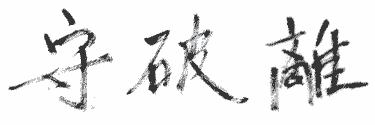
Shu Ha Ri


Shu Ha Rei


Shu Ha Rei is the Japanese martial concept that describes the stages of Mastery. It is roughly translated as “first learn, then detach and finally transcend”. It’s a hard concept to present because so many instructors actually avoid the idea and some, less well meaning instructors, actually see it as a negative because they may lose power and control over a students.


Shu is the first stage and it actually means to “Obey” or “protect”. In this phase a student learns the traditions, techniques, fundamentals and principles of a style or tradition. Students in this phase should be listening and practicing very hard to master the concepts of the style. This does not mean that everyone will look the same, but it does mean that the training and traditions will be mastered by the students.


Ha is the second stage and means to “Detach” or “Digress”. Students break from tradition and start to experience things outside of the tradition, they separate and explore the ideas of the tradition personally. They have integrated the dogma and ideology as well as the techniques and now they are moving to integrate and challenge the ideas and see what works for them. This period can be hard on students as they start to think for themselves about the art they are training in, they find holes and things that are missing. But soon they realize that it is not the art that has holes in it, but the instructors ability to transmit on a personal level to them.


Ri is the last phase and it means to “Leave” or “separate” from the core. Not meaning they actually leave the style. This is far to often the misinterpretation of the “Ri” phase. It means that they are now thinking for themselves and forming ideas of their own. They are transcending the Dogma and have really began to understand the physical side of training and have began to formulate their own ideas. Their understanding is beyond the proverbs and basic ideas and now transcending that, they are becoming the style more and the style is personal to them.


Their normally is no real corresponding rank for the phases of mastery known as “Shu-Ha-Ri” but a loose representation would be those Kyu levels are firmly in the Shu phase of training, still trying to learn the fundamentals of the system and engrain its teachings in themselves. Lower Dan levels should be moving into the Ha phase and working both inside and outside the style to build their understanding, then around 5th to 6th dan one can say they should be in the Ri phase were their teachings become part of them and their own.


However the ranking levels do not often correspond with the phases of mastery. I know of a few seniors that have never gotten out of the Shu phase and teach Dogma without knowing the true meaning of several of the things they teach and I also know a few juniors that are well ahead of others in the phases of mastery and have yet to make their Shodan. I think the saddest part of the whole process is seeing people that feel they are beyond the level they are truly at. I mostly see this with Brown belts that seem to think they understand more than they do. The inability to continue learning or to try and go to the next step before they have completed their learning is much more sad than a senior who is stuck as a student.


I know of a few students who refuse to learn from others and simply want to teach or get a good work out but won’t let go of ego. They think it is because of their knowledge of Karate, but really it’s the lack of knowledge that leads them to this issue!


So, how do you apply Shu Ha Ri to your own training and why should you do it? Well you should try to apply it because you will gain an even richer understanding of Karate and make it more personal. The how is much harder. First off you have to cast off your Ego and say “I am here to learn”, and doing that at a 3rd, 4th or 5th Dan can be very difficult. You have to realize that even Funakoshi, the creator of Karate…Nakayama the innovator of Karate and all those other masters…were still students at heart! That is true magic! You have to say, even if I think I know this…I have to go back and see what I was taught for what it is and really study it! Look into it, understand it and then move beyond and apply it to other studies you have had or other experiences. You need to realize that Karate is only a small part of who you are, and you can bring so much more to the table once you are past the Shu part. Move into the Ha part with an open mind and apply things that may compliment your training. Learn how to teach or learn more about the body. And then Ri…well that happens all by itself.

Friday, April 22, 2011

Steal my knowledge please...but give back a bit


Steal my knowledge please...but give back a bit


There is an ancient Chinese saying when it comes to teaching students the martial arts. It is said that you are not taught ones style of fighting as much as you steal their knowledge.


Back then the instructors were normally dignitaries that had retired, retired mayors and politicians or military personnel that had come back from war and were no longer serving. They were old men that had hard lives serving the royalty and they were not willing to take the guff from students.


The understanding was that students were their to train and learn. And the masters were there to teach. But students had to think of it as the harder they worked the more that the instructor would offer. It was not uncommon for an instructor to have four different students, all had been training for the same amount of time and only one of them was taught the whole style of Karate that the instructor had to offer. The reason was simple, the student proved that they would learn more and pass on the system to other worthy students with out change because they worked for it.


The students would have a period of time were they had to work before they even got to learn the basic stances of the style. The masters had them cleaning the floors outside the homes or monasteries with brooms and doing work in the fields, in the case of Chinese masters they had them learn the religious aspects of their training prior to seeing a form or kick thrown and most of the students had to give up all their lives possessions and often leave the homes they grew up in to learn in places like Wu mountain or Shaolin monastery.


In Okinawa many of the students were selected by the instructors because they worked with them in the army or service of the emperor. The students still had to work hard in their jobs and most of the time for less than others would be getting for their service, but with the knowledge that they would be learning more and have a better job at the end.


Now we have students that come in and pay money and do little for the clubs they think they own because they pay the rent. The truth is that if they don’t do more than just show up…eventually they wont have anywhere to show up to! What I think we need to see more of is the instructors giving a basic class and set of skill development to the masses but selecting several students that prove they deserve more and giving them more. If a student goes out of their way to show they want the knowledge they are training for then they get more back.


I see to many clubs with three or four students killing themselves to advertise, run tournaments and work hard to develop a nice base of students for the instructor and others that do about as much as they would if they were at a gym! The funny thing is that if every senior did 1 hour of work every month then the majority of the seniors who are killing themselves right now could do so much more to bring in more students.


If a senior who is spending 6 hours a week doing things for an organization and gets 6 things done that week had help, and 1 of those items was taken off their plate, they could focus more on other things, or simply train. The other student has only spent 1 hour…the benefits are huge, especially if 4 people step up and take over basic things that have to be done.


My point is that if everyone pitched in one hour once a month, and the average dojo has 20 students, that’s 20 hours of work that the students are doing, in place of one senior doing 6 hours. Think on it, we would be able to have clubs run like corporations and we would have massive clubs with great training, the instructors would all relax into just training and the value of the work we see would be immeasurable.


I believe that all students, paying full price or getting family discounts should give back. My tactic, seeing as I don’t have a club of my own, is to use my classes to stimulate giving. I don’t care if its giving back to the organization or giving back to the society we live in. If you train with me in a seminar, I am not getting paid for it! But I ask that you take the money you would be paying for my class and you donate it to a cause, take a hour of your own time and do some kind of work that will help others. I want you to remember that with out volunteers and hard work we would never get half the things done we want in this world.

So, steal my knowledge, but give back a bit!

The art of movement


The art of movement


Karate is the art of Human movement. It focuses on efficient use of the body to produce the maximum amount of impact on a target as well as using the body as effectively as possible in any given situation.


Because of the fact that it is a art or study of human movement I often say that you should be studying outside of the dojo. You should be doing home Karate to learn how your body specific moves and reacts to different ideas that are introduced in the Dojo. You should however also look into other sciences to improve your own ability.


Two sciences that can improve the ability of any martial artist, especially Karate students would be the science of Physics and Biology or Anatomy. The reason for Anatomy and biology is that they give you a very base understanding of the body and how it works. You get to know your body from a very different angle than just “wearing it”. You will learn how muscles work, how they don’t work, what your bones are actually for and how strong they are! You will learn a bit about what fuels you and how, and how your body is made to move, and how and why it is not!


With Anatomy you will learn about were the “danger” spots are actually located and you will learn why you get hurt, how long it will take to heal and what is actually happening in your body. I have been told so much Junk science over the years that it is getting silly. I have read and been told about the mystical things our body can do…and those are from real scientists! The truth is the body is very understandable but does some incredible things, and yet it still has its limits.


The next area of study I suggest is Physics. Not Astral physics but the kind of physics that went into kinesiology. Levers, lines of force, power, acceleration, Newton’s laws and the basics will give you a better idea of how to use your body and what you need to do with all that glorious anatomy to effect your partner/attacker in a more effective way.


You don’t need to study these sciences as a profession, not that this would hurt, but it will help if you pick up a book, read a few things on line and ask questions of people who know about these sciences to get a basic understanding of these sciences. It is a funny concept, not lost on my, that a British Scientist born in the 1600’s, has more to tell me about the art of human movement than most newer instructors. First off his laws of motion govern or explain all the aspects of movement that I need to know to better my movement or at least understand what is going on. And most instructors forget that movement, be it Karate or ballet are all governed by the laws of physics.


A crash course in Newtons laws of motion would greatly help all instructors and students who want to understand how motion effects what we are doing. When you merge Biology and Kinesiology/Physics you get a science called Biomechanics or the mechanical study of movement. Another science well worth checking out.


My whole concept of lines of force is based on my study of Biomechanics. The act of applying force into the ground with your feet and using some form of movement(rotation, motion or even vibration) as well as thrust into the ground in the opposite direction as the technique will “push” more force into the target. The line of force travels from the floor, thru the heel, up the leg, to the hips, thru the torso, into the arm and out to the first and into your target.


In order for you to show efficient lines of force you can not have your arms sway far way from your body or have lack of drive into the floor. So, the better your form and technique the more your lines of force will be able to transfer and magnify force from the ground into the opponent. Also, the more efficiently you learn to use your body and not just throw your arm at an opponent, or leg if kicking, the more force you can apply to the task at hand.


My point is that when you take the basic Karate you have learned and start learning why things are done the way they are, the more you start to understand and can apply it knowingly. Study the sciences and your “Art” now becomes science and the practice of Karate becomes the art of human movement.

Teaching children: My journey into madness


Teaching children: My journey into madness


I have trained in Karate since I was six, I have been doing Karate my entire adult life and most of my child hood. I have trained in other sports and forms of martial arts but all of them tended to lean towards helping me understand Karate better. So, at sixteen, after 10 years of training I taught my first beginner how to kick and punch…and it was a rush. Sensei Dingman took me aside in the down town club and asked me to teach some new people Karate. I was so stoked…but how and what would I show them/


A year later I had gotten a routean laid out in my head and was actually getting fairly good at teaching Karate to new people, but I moved to East St. Paul and found a new teacher to work out with. I have to say that most of my “teaching” was limited to when other seniors were not available but basically I got to teach once a month because of new people constantly coming in to the club and every once and a while I got to work with them.


My experience at my new club was good, the instructor was great and I was having fun, but everyone was a lower rank and new people were simply thrown into class to learn. My teaching was limited to a few friends that wanted a taste of Karate. Then I got the teaching bug bad and when I was in my last year of high school I began a class at the school. I had what I would say were some really talented students, some even graded and got their yellow and orange belts.


As time went on I taught some of the new people at the clubs, transferred back to Dingman Senseis club and began traveling with Dingman Sensei from one club to another, studied teaching under my Sempai, Sensei Brian, and taught at one of four of Dingman Senseis clubs when new students came in. It was fun learning from these men, the very originator of our style of JKA Karate and one of the most decorated sport athletes in our organization.


Years went buy and I took over a class teaching at the Sergeant park club. I was still learning how to take the knowledge that Dingman Sensei and the many masters had passed on to me and present it in some kind of half intelligent way to students. Dingman Sensei saw I was way to hard on people and taught like a drill Sergeant most of the time, not very much explaining and simply barking out orders. He told me that he had a plan to teach me patience. I had served my country as a 2nd Lt. In the armoured division and most of my teaching was drilling like when I went thru basic, mixed with the ideas that he had taught me. But he knew that had to change. He had a group that would teach me patience and also weed out any thoughts of pushing people to hard.


We had this summer camp on a island, Sensei used to joke that no one could run away unless they could swim well! I had gone out pretty much every year to train three times a day with Dingman Sensei, Dell Sensei and any other instructors that were teaching. But he had a plan, this year….I would teach the kids class! I did not think much of it, I was up for it and I was ready to give out my brand of over the top strict training and these kids were going to listen, pay me the right kind of respect and push themselves to work hard in my classes, I was the teacher…they were my pray….or so I thought!


I got to the island all primed and pumped up and with in the first five minutes of being on the island and being the childrens instructor…I realized that I was not in control….and if I wanted to get out of this alive I needed to learn how to teach kids! Teaching teens, adults and family Karate is a lot different than just teaching kids classes! They were in control and they let me know it! ½ hour into the first class half of them were in full rebellion, they were rolling on the floor and aiming their kicks at each other and basically running their own class! I had NOTHING!


My plans were to whip the kids into shape and give them a great eyeball full of how “real Karate” was done. I had done NO research or thinking of games ext. I basically wanted to have them all line up in a perfect straight line and react to anything I barked out with out a sound! We were going to Kiai and show great spirit, so much so that we would shock the adults training in the big club across the path! Yah, we were loud, but not the way I thought…the kids were screaming and going crazy, mayhem was about the only way I could describe my first class.


We finished and the kids went to eat dinner, and I was confused, upset and felt like I had learned nothing in my years of training and teaching beginners. The kids were a good variety of ranks and the worst ones to control were the purple belts. It was not like they were all beginners, in fact most were orange and up! I felt like a fraud, I had no control over the classes and they were eating me alive!


I went to dinner and then skulked around wondering what the heck I was going to do the next day when I had THREE classes I had to run with them. And the worst part was we were on the first day and I had four more days to go! That’s twelve more classes of me not having control, the kids running over me and my depression was starting to set in. I was getting ready to throw in the towel and tell Dingman Sensei I had no clue what I was doing, it was later now and even the four coffees I had were not picking me up!


It was dark and we had two fires going on the beach and higher up near the paths. The higher up fire had Dingman Sensei, Del Sensei and one of the other instructors sitting around the fire chatting and staying warm on the cool night. I remember walking up to Sensei and he just knew by looking at me that I had no energy left and was beat, and of course he started laughing. He asked why I looked like I just lost my best friend and I let it all out. I told him about the chaos and the anarchy that was the first class and how all the kids hated me and thought I was mean, they were not having any fun and they were not enjoying Karate. He started laughing even more and asked me to repeat myself.


I told him again “the kids hate me, are not enjoying Karate and I had no idea what I was doing”. He waved his finger in the air and said, “They are not having any fun, they need to have fun”. He told me that kids train for different reasons than adults, they want to enjoy themselves so we have to teach them the basics of Karate in a way that they will respond to. They need to play “Karate games” and you need to have fun. He would not let me ask what kind of games, but I set out right away to my cabin to start thinking of games.


I was bunking with the kids to make sure they were having fun but not destroying the place and give the adults some time to relax. I sat up for about two hours thinking of games and working on ideas. It was at that time that I figured out a good split would be about a 60/40 split with them, 60 percent games and the rest solid Karate. I worked on different games in my head and also set my mind on the fact that you have to be a different kind of instructor with kids, fun but strict/ firm but friendly. I started teaching the next morning and from that time on I became every kids best friend, but still pushed them to work hard…during games and I even set up basics as games so that the kids would learn their Kihon, Kata and Kumite while doing it as fun games.


By the end of camp I had started to figure things out a bit more and after hat first horror of a class I promised myself not to be so serious when teaching kids, in mixed groups I would also lighten up a bit. I had to learn the hard way that the best way to get thru to kids is to remember that they are kids! To make them do things that they find fun as well as push them to do drills and exercises that were specific to Karate. It was a lot of fun and I can truly say that I no longer fear teaching kids…with the right attitude all instructors can get a great amount of satisfaction seeing them grow up thru the ranks.


My thoughts on teaching kids now is that all seniors should look at teaching kids and anyone that thinks they want to be a Karate instructor should start off with kids, if they have the ability to connect with them, you are sure to be able to do it with adults as well!

Wednesday, April 20, 2011

Training in Karate vs combat sports


Training in Karate vs combat sports


When a student starts out in a combat sport they learn the basics and get to practice them right away, hitting bags and sparring with other students pretty much the first day. But their ability to polish and refine those moves is limited by the need to defend themselves and then by the fact that they do not get to work techniques in most cases with people of higher level, on a one on one basis. They are thrown right into sparring and the act of working on techniques is left well behind. They have four or five tools to use and that is about all. Depending on their art they learn a few punches and kicks, strike a bag a few work outs to break a sweat then it is off to the ring to pound on each other.


Sport training also has on added benefit over most traditional martial arts, they get in great shape right away. Karate students will get in fair shape and then kind of slowly build up as they learn they have to do home work and pick up other activities to benefit their training. It seems weird but Karate students will get healthy without injury, but they may not be in the best physical shape compared to a boxer or kick boxer. But even the boxer and kick boxer takes a large chunk of their gym time and does just conditioning…again taking away from technical development. Most people also notice that while they may be getting in shape once they start moving along and get some actual sport fights they are getting injured a lot more and they quit because their body cannot take the damage…and as they get older it takes much longer to heal! That conditioning training that makes them look like they are in great shape is doing its own form of damage to the soft connective tissues and bone!


The benefit of Karate is that while you may progress slower, you are given a much more in depth view of Kihon Waza and encouraged to work on perfecting those movements and learning new angles, how to use movement and more importantly how to block and use distance to NOT get hit. A meeting of combat and sport fighters at the age of 60 or 70 would show you a lot of broken bodies and brain injuries that affect these people. Yes in their youth they had great skills but now they are plagued by injuries and most of those that started dropped out, not out of boredom or family responsibility, but for health reasons. An old Judo coach of mine once said…”Judo players burn brightly then burn out and leave. Only a few can train into their old age.” That does not sound like what I wanted to be part of.


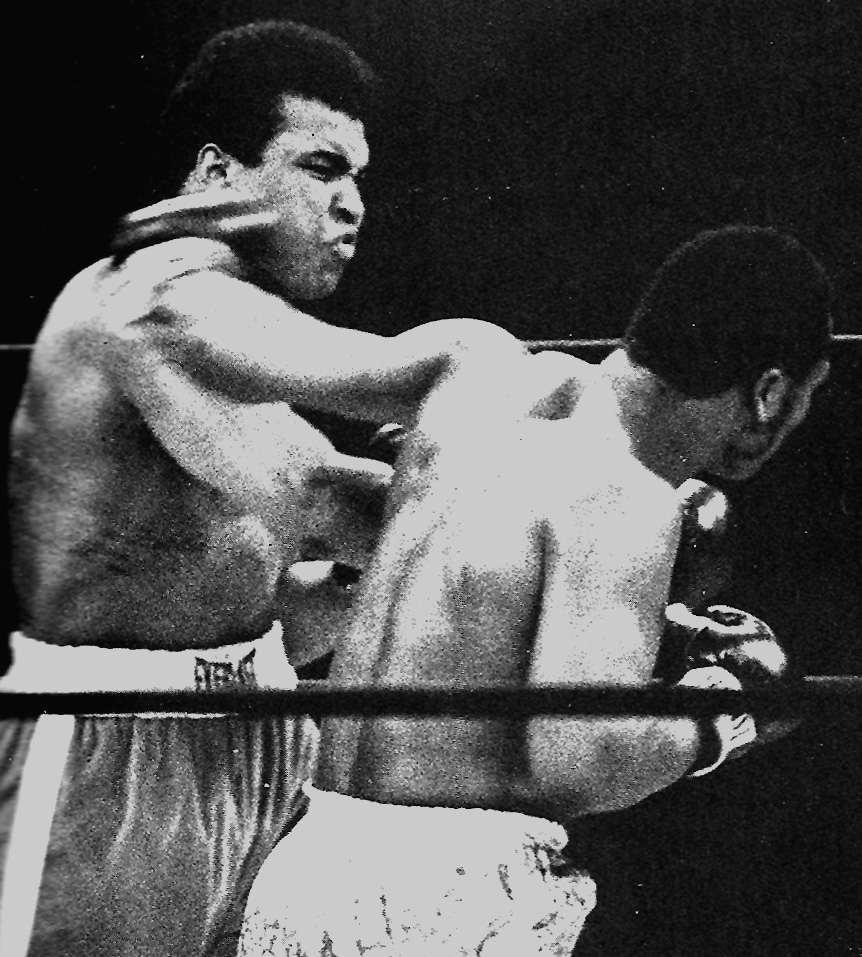
I remember seeing a documentary on Mohammed Ali and his brain injuries made him almost impossible to understand, he used a walking stick to get around or was held up by others and he had the blank look on his face that other brain injury victims had. I was very sad because at one time he was a great fighter and a great speaker, and now he was a shell of his former self. Sugar ray has a bad eye, when I say bad I mean he is blind in one eye. One other boxer that comes to mind is Edward Sanders, a great amateur boxer who was even in the Olympics. He went pro and with in 9 fights was dead. He walked into a ring and was carried out! Doctors later said that he had died from brain injuries caused by contact in training.


Combat sports include a high level of contact in training, they try not to go all out but it is often more contact and cumulative impact that leads to a medical syndrome that was even named after the most prolific contact combat sport “Dementia Pugilistica”. Some of the long time practitioners are seen as Punch Drunk or Punchy after years of taking strikes to the head. It has become such a concern that medical doctors are actually focusing on the syndrome which used to be called chronic Traumatic Brain injury associated with boxing….yah, Demintia Pugilistica does not seem that hard to say anymore does it? Demential Pugilistica has been confused with Parkinsons and Alzheimers for many years, it was not until recently that they have made the distinction. The list of high end boxers that suffered from this disorder is infact very long. Jack Dempsey, Floyd Patterson, Wilfred Benitez, Freddie Roach, sugar Ray Robinson, Joe Frazier, all suffered from it.


Contrast that with Karate were we focus on not getting hit, our training is relatively safe and we frown on excessive contact and we can train for a life time. The benefits are obvious. Mohammed Ali is exactly my instructors age…69. If you were to look at them side by side and ask yourself who is more fit at that age, who can you understand talking, who needs physical help to walk around…only Dingman Sensei can be understood, is in great physical shape and needs no help walking around. Now you can say he is the exeption to the rule, but I look at people like Saeki Sensei, who while not as old as Sensei is a long time student and instructor in Karate. Or better yet, look at Kagawa, Tanaka, Yahara, Kanazawa, Nishyama, Nakayama and Ozawa before the last three passed away they were training in the clubs and walking around healthy, and that after Nakayama Sensei suffered a major injury at his job as a ski instructor. Many of the older Karate instructors say that healthy life style and Karate being a part of their life helped them live a lot longer than their family did and also longer than friends they grew up with.


My history of training includes a few years of Judo, a year of Kickboxing (north American not Thai) , some other grappling arts and Karate. By far the most I have done is Karate. But seeing the amount of training that is done in Judo and kickboxing for Conditioning makes me thing we need a bit more of that in Karate. But I also realize as I look at juniors coming up through Karate that that we need a more effective focus on techniques as well. We need a balance between the conditioning of combat arts and also a solid foundation in Karate technical training as well.


While we can learn from the conditioning training of other sports, like taking Tabata training from a sport as different as figure skating, we also have to be aware of the issues with training in these sports. For instance the impact based arts like Muay Thai and boxing lead to a large amount of head/brain injuries and lots are not diagnosed. Judo, Jujitsu and Wrestling have a large number of neck and spine injuries as well as injuries to internal organize that for the most part are cumulative and go undiagnosed until autopsy!


The major difference after all of this between a combat sport and a martial art is the goals. Martial arts should be long goal oriented, life time based goals while the combat sports are short term and event based goals. Someone training in a true martial art should be looking at the long term availability of training and its effects on the body, were as the combat sport person is more concerned about short term goals and getting ready for the next event only. Neither is bad, you just have to make choices.


Monday, April 18, 2011

Bowing


Bowing


There is so much misunderstanding about bowing in general and I have actually seen some pretty big deals made over such a thing as bowing. The truth is that the strangeness is misguided and most people do not realize how average and everyday bowing actually is. Its very common in most cultures and yet when we see it done in a Dojo with our PJ’s on we think its some strange kind of mystical salute or something….its not.


I hear so often that Bowing is an Asian thing or that it is a way of showing subservience in Asian Culture. This is actually WRONG! The act of bowing is not limited to Asian culture, in fact the act of using a bowing or Stooping posture to show subservience is mostly limited to Western culture. Yes, you read that correctly, we bow in western culture as well, and more often to address the differences in social status!


For instance take into account the social etiquette followed when meeting royalty. Watch the upcoming nuptials of the royal prince and see everyone stoop when he comes by or when the queen comes buy. Its so funny to think that someone would be willing to stoop and show they are lesser than a monarch that is not even their monarch but they won’t bow to someone as a way of greeting them when the intent is not to show the social division between the two people!


In the west we use stooping or bowing to indicate that a person is of higher social status than us, and pretty much that is about it. We look at nobility and aristocracy and bow or stoop when talking to them, addressing them or greeting them. Now we have added the hand shake or hand hold to the movement but it is very clear that we in fact bow to royalty in our culture (being of European descent, my assenters probably bowed and stooped when nobility rode by on a horse or when aristocrats came to see their land.)


In Europe the bow was specifically a male act, females would Curtsy in its place. Originally ladies probably bowed, but with specific clothing inventions and fashion being what it was, the curtsy came into fashion to deal with the issue of getting wale bones skewering your chest and abdomen if you tried to bow!


The term “bowing and scraping” was very specifically referring to a males deep bow. The ceremony of bowing and scraping was created to show an excessive amount of respect, as a show! The term scraping came from the right foot extending to the rear as one took on a lunge position as they lowered their torso and crossed their right arm across their abdomen. The foot would scrape as it moved backwards threw the obviously dirty street or floors and make a scraping sound. Thus the act of showing excessive respect was called “Bowing and scraping”.


In Asian culture the bow is used not only as a way of showing respect but also as a greeting. We always see pictures of Samurai bowing to their Daimyo and the Emperor, and we also see other forms of subservient bowing, but what is often missed is the details of bows or the fact that farmers would bow to other farmers in place of handshakes. It is simply a cultural greeting that has been fostered and established in Asian Culture over centuries.


Bowing can generally be divided into three main types of bows; Informal, formal and VERY formal bowing. The bow originates at the waste and lowers the torso and head as you bend forwards. There are also standing and kneeling bows.


Informal bows are generally about 15 degrees and very brief, much like a “quick hand shake”. However they should still be done from the waste and not as a nod done from the neck, the nod is not a bow and is often seen as dismissive and or extremely informal, and somewhat rude if done to a person of higher social status. Formal bows are done with a 30 degree angle and held for a short time, the longer the hold and the more one stays in position the more respect is being offered to the recipient of the bow. In Asian Culture is is accepted that ladies will bow with their hands clasped together in front of themselves while men bow with their hands hanging at their sides. Very Formal bows are as deep as a person can go close to 90 Degrees and held as long as one feels they should to demonstrate the extreme amount of respect and reverence one has for a peron. The hands may move to the knees to support yourself if required but the intent is to make sure that your head is much lower than the person you are bowing to.


A bow can be a greeting, a formal apology or as a way of showing respect. Normally bowing indicates the relationship in sociao-economic status differences between two people greeting each other as well. Bowing in the east can be used as a formal greeting, a gesture of respect, Apology and a sign of gratitude, respect, sincerity, remorse and in many religious ceremonies. However, a bow is not always all of these, obviously.


One other term we get from the Asian act of bowing is the Kowtow. This is the act of kneeling and bowing deeply. However this act has fallen off in use since the fall of Imperial China. In China, the act of bowing is not as formal and intricate as in Japan or Korea.


Many people think that bowing is a form of worship, because it can be linked to Buddhist and Shinto rights in Japanese culture, but this is just a small part of the use of bowing.


Bowing in Martial arts takes on several purposes, not only is it used as a greeting for the instructor but it is also used when asking a question or coming up to an instructor as a way of apologizing for interrupting them and then again after the answer is given to thank them for their time. Its all about respect!


A bow is also done before and after sparring. The bowing before a sparring match is a way of thanking a partner for their help, as a promise be considerate and not harm the other person while training. It’s a sign of respect. Also the placement of the open hands on the side was to show the partner you are about to train with that you are not using a weapon, a closed fist while bowing may contain a hidden weapon so it is considered rude to bow to a training partner with clenched fists.


Is bowing a form of worship? NO, it is as natural a social movement as shaking ones hand to say hello, to establish a promise or to say think and showing respect. Some cultures have strict taboo’s against bowing to others, I am not going to get into that one here on a public blog. You want my answers on why Jews, Christians and Muslims don’t bow to others or my thoughts on it…come talk to me, but out of respect for those religious beliefs I am not going to say anything in public.


So, we know how to bow and some of the most used reasons to bow, how about the times you need to bow in the Karate club? We bow when coming on and off the floor (in or out of the training area), we bow to the instructors when we first see them in class. We bow to our seniors if they are in class before us. And we bow to each other before and after Kumite.. We also bow before and after Kata and we bow to the front of the Dojo to show respect to the instructor and the Kimaza (representation of Funakoshi Sensei and other instructors). All of these are simply to show respect, that is all. Basically when in doubt….bow!

Wednesday, April 06, 2011

Niju Kun: 20 precepts of Funakoshi part two


The first part of the Niju Kun is pretty much the same as the Dojo Kun. It teaches you how to be a better person and focuses on attitude and not so much on execution or practice. This part of the Niju Kun is very focused on the execution of Karate and not so much on what kind of person you are.


The Second half is really what people should be using to guide them thru the physical training and how to use Karate properly, as a martial art. It clearly states that this is not a sport, while it the sport aspect can be used to hone your skills but as Funakoshi so well points out, its not about winning…but its about not losing!


Karate Wa Yu No Gotoku Taezu Netsu O Atae Zareba Motono Mizuni Kaeru : Karate is like boiling water; without heat, it returns to its tepid state. This is so true! If you don’t train regularly your “Sword will become dull” , that’s what my instructor used to say to me and it is so true. The more time a student takes off from training the harder it is to advance, and while our brain may retain the information, the more we lose the things like timing or flow in sparring.


Karate should be done a little each day to ensure we have good timing and reactions, then hard two to three times a week to ensure we progress! Keep this in mind the next time you figure you will take spring break off or summer off! When you come back you need to scramble to get your edge back!


Katsu kangae wa motsuna; makenu kangae wa hitsuyo :Do not think of winning. Think, rather, of not losing. This speaks directly to the sporting events that some Karate has become! Those practicing Karate will know that you should not worry about points, scoring a technique unless it is followed up by others and used only to save your life or learn how to save your life. You will never Lose at Karate, unless you give up training. Even black belts can lose if they stop training at the clubs and working on their Karate. And tournament champions are in the same boat.


Tekki ni yotte tenka seyo : Make adjustments according to your opponent. I have seen far too often when a student is sparring and tries to force the opponent to play their game, to adjust to their distance and to work with their timing. Long fighters are running into shorter fighters and not able to work the distance properly. You train with a specific kind of person then fall apart when a new one comes along. You should always be adjusting your techniques and your distances and timing to the other fighter you are facing.


If you work with children or lower ranks, adjust your skill set so you don’t hurt them, but challenge them, and when you work with your equal, try and push yourself and them to the limits. If you are lucky enough to work with a senior…push to come up to their level! It will make you a better person.


Tattakai wa kyo-jitsu no soju ikan ni ari :The outcome of a battle depends on how one handles emptiness and fullness. This could be read that “DISTANCE” wins fights. The fact that you need to know your distance and the distance of your opponent is the most important lesson you can learn in Karate for self defense or for sparring in general. If you don’t understand distance, you don’t understand kumite or self protection!


Those that know and can manipulate distance have 90% of the battle won!


Hi to no te-ashi wa ken to omoe :Think of hands and feet as swords. Be it sparring or fighting, one should regard the attackers hands and legs as very dangerous weapons. One should never take for granted an attack will not do great damage to them and put them in a terrible position. If we show proper respect for the ability of an attackers hands and feet to damage us and cause us not to be able to defend ourselves we will more than likely end the fight winning.


I have seen people try to “take a punch” to show they are tough or because they feel they can and end up losing a fight because that one punch hurt them very badly. I have also see a friend take a kick and end up with broken ribs, even after “winning” a fight. The other guy left with his ego hurt and a bloody nose that healed fast, my friend was out for weeks!


Danshi mon o izureba hyakuman no teki ari :When you step beyond your own gate, you face a million enemies. This is a great idea for modern times. To often we see people walking around in a haze, they are not alert and they have headsets on or they are texting on their phones. It would be very easy for an aggressor to quickly take advantage of this situation and harm them.


One should walk around alert and pay attention to dangerous areas they may be in and situations that could get out of hand very fast. Not being in a bad spot is the first place is the best way to avoid these bad situations, but being aware of your surroundings is the next best way to make sure you do not end up in a bad situation. This does not mean you need to be paranoid, but this does mean being alert!


Kamae wa shoshinsha ni atowa shizentai : Formal stances are for beginners; later, one stands naturally. When we start in Karate we are taught very specific techniques and ways to stand and very specific Karate techniques. Up to Black belt one should strive to follow the basic patterns and perform the movements in specific ways. This allows you to have a solid foundation and allows you to learn the style.


After you are a black belt its time to put “you” in your Karate and see what kind of personality you can bring to your training. Self expression is important in advanced training and even the way you stand and move should show your personality and styles. However, don’t forget your basics.


Kata wa tadashiku, jisen wa betsumono : Perform prescribed sets of techniques exactly; actual combat is another matter. This is kind of like the previous note. The point to Kata and drills and Waza Keiko is to learn movement skills and to ingrain them in your mind and body. Then you will become very good at these movements and make them natural.


IF you ever need to engage in combat/self defense you will notice right away that your techniques are not going to be as crisp and the outcome of each movement is not going to work out the same way as it does in the club. You should not be focusing on pin point accurate and perfect techniques, you won’t have time to warm up and make your body limber, you will only have time to execute a fundamental and basic movement and hop that is all you need to do.


Actual combat is not about perfect form or technique! Its about executing a technique that is effective and efficient and will end the battle with your attacker.


Chikara no kyojaku, karada no shinshuku, waza no kankyu wo wasaruna.: Do not forget; the employment of withdrawal of power, the extension or contraction of the body, the swift or leisurely application of technique. Strength and weakness, the bodies Expansion and Contractions, Slowness and quickness are all parts of Karate training. This line does not say exactly what the “translations” are saying. Basically it is Funakoshi Sensei saying that there is more to Karate training than flailing about. Think of the timing, difference in speed, distance and pace of techniques. Power applications may be different as well. Keep all these in mind and train with the mind that you have to look deeper than just punching and kicking.


Tsune ni shinen ku fu seyo : Be constantly mindful, diligent, and resourceful, in your pursuit of the Way. When you train in Karate you should be looking at it from different points of view, looking into the depth of techniques and try to view training from different angles, cross train with other instructors, get different ideas and go from one club to the next seeking to find out more about yourself and your style.


I learned a great deal from Judo and from Kendo about my Karate! I also learned a lot from moving between Sensei Dingman and other instructors, and learned a lot from my seniors as well. I pushed myself to train with other instructors, to read, to integrate my school studies into Karate and I actively sought out new ideas and new ways to do things. I bring all of that to my sparring, self defense and also my training.


The Niju Kun is a great historical lessen, or set of lessons, that the founder of Shotokan has left for us. All training in this style should revolve around the lessons that the founder left, but I find more and more that sport style Karate is taking over, and we are starting to focus to much on rank! Some instructors prance around like peacocks and look for titles and recognition that has nothing to do with their personal training. They force us to use titles when we talk to them (see blog on honorifics) and they forget why they train…or never understood it to begin with. I have seen instructor teach by pacing up and down the side of a class barking orders and not once throwing a punch or kick on their own.


The more we want to maintain the traditions of Karate the more important the Dojo and Niju kun become. We need to look at Karate as a way of defending ourselves and as a way to grow personally. We have to counter the modern trends of making Karate a sport and a power struggle for others to pump out their chests and throw old trophies at us to say how great they are. We need to look to instructors like Dingman Sensei and Brian Sensei who still DO Karate and don’t just talk about what they did!


Learn the Niju Kun and explore it, find out what else it says to you, these two blogs were just a over view with a few ideas. Talk about it with fellow Karate students and instructors and explore the vast meaning of the Niju kun for yourself and grow with the words of the founder!