Thursday, April 05, 2018

When your reach exceeds your grasp


              I am a big advocate of SLOWING Down the progress of students up the ranks and introducing skills that are rank level appropriate and then working them till they are near perfect. I don’t think students should work outside their skill levels much, even if they train 6 days a week we often see them try and do Kata they just are not ready to learn or jump into free sparring way to early and then they forget or ignore the Heian Katas and they think only about senior Kata and Kumite. This leads to a loss of basic skills and they never have that base to work off of, so they end up with sloppy basics. However lately the trend is to throw senior level or advanced forms and skills at people who don’t have the knowledge and training to handle the new advanced skills, it’s called Sport Karate.


 I was watching a few of my students the other day warming up doing Heian Yondan, I stopped them and corrected them and they went and worked on the Kata for a bit then started on Heian Godan, that was as far as they got…Heian Shodan to Godan. I was super proud of them…they were Black belts after all and knew that they needed solid foundations and training to move up to more advanced Kata. They were doing Jion and Jutte as Tokui kata but they did not ignore the lower Kata, in fact they gave them even more training than their training Katas. Once they get the skills polished up a bit and we start class we always start class with Sonobu and Ido Kihon waza to remind people that basics and basic skills are what propel you into senior level training and allow you to do these skills properly.


                Karate skills are like the progress between crawling and sprinting; first you crawl, then stand, then walk, then run, then sprint! You cannot really jump a skill set and successfully progress without missing key components of the skills. I never teach Mawashi Geri before I teach Mae geri, Mae Geri being the key primary kicking skill that you should be taught. Actually I am very focused on reworking, working then working some more, and finally reworking base skills before I ever think about moving to a more advanced skill. It’s the basis for a solid Kihon-centric system.  This is why the rank system was set up after all. I don’t dispute that some people want to jump into more advanced training and even enjoy it, even if they cannot do them very well or end up with sloppy Kihon, but it’s not proper to train a junior in senior level skills.


I have also seen the opposite thought process however and it illustrated to me that I was DEAD RIGHT. I was watching a class of mostly junior brown belts and Black belts warm up at a Dojo I was asked to teach at a bit ago and saw they were all working on Kanku Sho. All of them! The problem was that the Black belts did not have a solid foundation in Kihon and had not put in their time in the junior Kata, never mind the intermediate Kanku Dai and others, and they jumped right into the advanced form. It was horrible! I had to do everything in my power to not stop them and tell them to not do that Kata and work on their weak points in the foundation. The issue was obvious, they were exceeding their grasp because they did not give themselves time to focus on the junior Katas and work their way up the TECHNICAL SCALE to be able to actually perform a Kata like this and do it any justice!     


I remember in the 90’s going to a kickboxing class with a buddy of mine, I was already a 1st Kyu and was looking for some fun training to do. The class warmed up jumping rope then some light stretching. I stuck out because I was very flexible and kind of had the basic drills down because of hours of Karate training, I knew a round house kick and a side kick from a front kick, even if they did them all a bit different. What struck me however was how 90% of the class had no basic training and at the end of the first ½ hour we “gloved up” and started hitting each other…..no basic sparring or gentle elevation from basics to drills…nope, right to hitting each other in a free sparring system of training. In a ½ hour class I saw about 3 bad injuries and probably 7 future bruises that were mostly self-inflicted. The instructor kind of shrugged it off like “Its kickboxing what did you expect”. Back then we used to make fun of the kick boxers for having little skills other than hitting each other with bad form, my Sempais went as far as entering the first “all styles” Kumite events and winning each division then saying it was not fair….we had actual training. Now we are trading in the mind set of basics first for flash first.  It’s hurting our art a great deal!


Like I said, we have a ranking system for a reason, we progress from white belt to Black belt and from 10th Kyu to Dan level for a reason, and we don’t let people jump ranks for any reason. You can be super athletic and still have to learn basics and polish the fundamentals before you get your next belt. When I teach I see members as fitting into one of three categories; Basic, Intermediate and advanced. I also train each level a bit different and focus on different skill sets for each level. It’s not just about time in and it’s not just about what color belt you have, it’s about how well you have progressed.


                10th to 6th Kyu level belts should be focused on the VERY Basic levels of Kihon and Kata and having fun with some 5 step sparring to work the basics.  This is what I call the basic level student. They need the time to develop movement patterns that will create the foundation or fundamentals of their Karate but instructors are scared to lose members to kick boxing classes who will get them hitting pads and bags and pile on foam protection so they can pound on each other! Let them, if the student does not understand that Karate is not about instant gratification…they should not be students.


                5th to 1st Kyu level students are intermediate students in my books. That’s normally purple to Brown belt levels. They should be working on skills that will help them become solid black belts. Focus on katas that will help build up stronger movement skills, develop Kumite reflexes with 1 step and then semi free sparring and work on more advanced Kihon, but the addition of a few extra more advanced things to play with is fine. But you should be keeping them working hard on skills and training that are in the realm of skill development, when you drop them into Kanku Sho or free sparring you are dropping them into a skill training program that is set up for people WHO ALREADY HAVE SKILLS TO HANDLE THIS. It’s not “Fun” to do these advanced skills if they SUCK at them and they lose skill because of it. It’s a detriment to their training!


                1st Dan and 2nd Dan are about development of advanced skills like Kumite and the rest of the 15 Kata. This is the level you can have some fun with advanced training once people have the physical ability and the mental ability to train coming together at this skill level. However I must say that these ranks are ranks I am pointing out those who are TRULY at this rank, not those that did sport Karate and are doing advanced training as a purple belt. Honestly there are far too many black belts training who don’t have the proper skill sets because their foundation is CRAP!


When you are training, as a rule, there is a “pyramid” of progressive importance that each club has in their training. Sometimes its discussed and well thought out and other times it’s just something you note and you can observe based on the classes set up. In my club the pyramid starts with a wide base of Kihon. We do Kihon every class and we focus on improved movement skills but the focus is on the basic mechanism of execution of the movement. We drill on proper mechanics, impact site on the weapon, targeting, proper body alignment and balance and other aspects of the movements, but we do them A LOT and drills in basics can take up an entire class.


Next in our pyramid is Kata. Kata is always done in class to end the class, if not as a focus. We do our ranking Kata and sometimes will address a senior level Kata. Honestly it takes a great deal of time to work on grading Kata so even if we are “focusing on Empi this month” we probably will work 1 week end out of 4 on it, and the week day training we will work on grading Kata only. Kata is the application of Kihon, but you start to see the breakdown of form and functionality from Kihon to Kata at this point and it needs to be focused on.  This is also were I normally see students beginning to reach farther than they can grasp. They begin going away from the basics training of Kihon and doing advanced Kata that they don’t understand as they are not mentally their yet. And the spiral begins to grow.


The Second from top part of our training pyramid at the Nintai club is Kumite. We try and have fun with it as often as possible but I can recall weeks that we did not do any Kumite and longer stints in which we did no free style, granted as of late we have really focused on this as a training component but mostly we see it as the end result of hard work, not a goal. Our students should be learning the basics and working up the Kumite skill ladder working with 3/5 step then 1 step then semi free and finally playing with free style a bit….not jumping into free style and dropping all the skills they worked so hard to acquire.


The top of our pyramid is conditioning, which I am a bit embarrassed about, we should be doing more stretching and conditioning but honestly I tend to leave that to the students. Its something I am trying to correct.


The point being is that working a class structure that omits the key components of the solid pyramid system does not make sense for longevity of a student, nor for the success of a student. It’s a given fact that you require solid Kihon to be able to perform Kata, and you have to train in Kata to understand the essence and structure of a form as well as internalizing the form itself to perform the form with any kind of success. Also, if you want to be good at Kumite you must first be good at the tools you are using to engage in Kumite, then you work on skills like distance and timing and work on explosiveness ext. You cannot skip the Kihon to get to the tasty bits that Kumite offer or you will look like a flopping fish when it comes time to engage in actual Kumite.


Students today almost reflexively reach beyond their grasp and want things that they should be made to wait for. They need to be pushed to train the details and build solid Kihon so that it’s a reflex to throw a good technique, the goal being that if they are attacked they don’t think, they react to the situation based on good form and experience using the waza. 


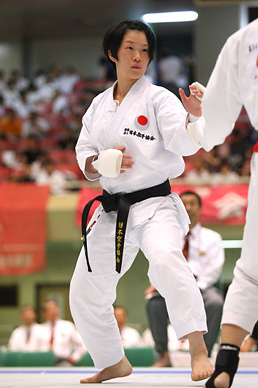
You want further proof of this ideology and its effect on training. Look at the champions of WKF Karate, watch them do their Katas with poor Kokutsu dachi and a focus on splashy, fancy moves, loud screaming and a shock factor that they try and put into their training, they push to excite with athletics with little actual substance. Then go watch Osaka sensei, his perfect form and execution is awe inspiring. Why is there such a vast difference, well Osaka Sensei trained with Nakayama Sensei who drilled Kihon over and over again so the students understood Kata, and he studied the Heian Katas till he had them down! He was there to shock you with perfect form and not just athletic ability.  The difference is often striking, when you consider that you are looking at two different world champions and both are said to be “the best”.  For my money, I want my students to be as good as Osaka Sensei, not fancy and dramatic like the new age Kata champs.


As instructors we are tasked with teaching good Karate, I for one will always work my students Kihon and think long term for them, not immediate gratification that helps them participate in sport. I want to be clear that Traditional Karate has a sporting component with tournament participation, however the outcome and ideals of the training. The focus is on good form and the Kumite focuses on the ideal of one punch one kill. This means you don’t compete for “points” but perfection of form and application of the functionality of the waza…..or if you used it for real…would you “finish” the fight. This is completely different from the current sport ideal of tag for points.


Students should be focused on building up solid basics, they should not be in a rush to jump into sport style training. When they do the results is the WKF style sport karate that is fancy, quick paced and explosive…but very sloppy and an activity that becomes something other than true Karate. We need to teach students to keep the course, not reach further than they can grasp and to focus on what is important….Training to learn and grow, not to show off and get ranks that don’t reflect their true understanding of Karate.

Tuesday, March 27, 2018

Honor thy father

               
                The title Sensei is a Japanese term that has come to mean Teacher, the actual term however translates as “one who came before”.  The character is the same as the word Xiansheng, which is the title for a man of respected stature. In a Karate club the Sensei is often seen as the “Father” of the club, regardless of age. They are the Patriarch, or matriarch of the club. Not only are they the founder in most cases, but they are the leader and as such they command a certain amount of respect.

                The Bible, and I don’t quote this book often, says that you should honor thy father and they mother. Some interpretations say “honor” means to love and respect them, others see it as providing for them and others mean to protect them and “hold” them close. In the Karate Dojo when the Sensei says to do something the only thing that they should expect is “Yes” or “Ous” and then the student does it…within reason. However this blog is not about just blindly doing what I ask if you are in my club or what you need to do if you are in class and your instructor barks orders or asks you to do something. It’s about how others behave towards the leader of the club/organization sometimes.

                Many years ago I started seeing changes in my instructor, he forgot things, had physical issues with just standing for an hour. He would be teaching Karate and forget what he was saying. They were little things but they began to concern me. Later he would show up for class and not even change out, he would sit and watch class while I taught, I had no problem with this as my instructor was not just my instructor but a pioneer of Karate in Winnipeg. He had opened many clubs, taught me Karate for 20 plus years and he had grown his group to a huge size before he started seeing issues come up. His physical and mental abilities began to change and he was not able to teach anymore, but I honored him and respected him a great deal and continued to teach for him and run things for him. I was unwilling to commit to the inevitable and put off making any moves to ask him to step aside, even if it was becoming more and more obvious that he needed to find a new place in the organization.
                When it was time for him to step down I pushed back against the seniors that were saying he needed to retire. I fought with my wife about it and refused to cave even though I saw it. It took a few seniors coming to me to state a change was needed and we had to make for the group to be viable. One of my seniors, who has passed since, sat down with me and we had a heart to heart about my Sensei. He told me that if we did not ask him to step aside he would be tarnishing his reputation and make the whole group suffer and slowly die out.
                None of this helped me however, I was stuck! I forgot that sometimes honoring him meant being straight with him and protecting him from himself. When it was finally done I had the whole group back me up and a letter was sent to him, I honestly still could not face him to see the sadness in his eyes, it killed me a little bit to realize that he was past his ability to teach. However I knew that honoring him meant asking him to retire.
                The way things went down, I am not proud of it. I honestly hoped that he would have stepped aside himself and still visited as long as he could. Or better yet just teach till he was 110 and then stopped teaching to relax for his last 20 years of life….wishful thinking I know. But being as Sensei is a stubborn man and a very proud man, we ended up asking him to step aside and which hurt his pride, not the intended results. While this hurt me a great deal to see I take solace in the face that we are pushing forwards teaching the way we were taught by him and keeping his organization alive. But losing him that way hurt more than anything. I told my wife I had to leave Karate, but she, and a few of the seniors, convinced me that we needed this and we needed to keep his memory alive by pushing forwards. And we needed to continue to respect him and his hard work by redoubling our efforts.

                I told you all this because I want you to know I am not perfect, heck not even close! But I have a beef with some people and its simply something I have to express. I don’t like people who don’t respect their Sensei. I have been around far too many of my instructors old students who don’t respect him. They kiss up to him, they buy him things and then they stab him in the back when he is not looking. Or they Crap on him and then run up to him calling him “my sensei”. The honest truth, not once has this happened and my instructor did not comment about it to me later.
                We went to a meeting a few years back and some of his old students were present. One particular guy ran up to him and hugged him and said “oh, my sensei, how are you” and when I say hugged…I mean an octopus could not have gotten a better grip on him.  My instructor asked me right away if I could see a knife protruding from his back. This is a common thing with my instructor however, he has so many Ex-students and they all “love him” but left him and most of them speak ill of him all the time.

                One such occasion I met an ex student of Sensei’s as my wife and I went out for dinner. The student uncomfortably sat down at a table near us and began talking Karate, something my wife LOATHS when we are out on our “date night”. I was polite and greeted the person and then proceeded to focus on my wife. However as the dinner went on the ex-student began talking Karate again and soon the conversation turned to Sensei. The comments turned to how “bull headed” he was and then it got ugly. I was polite but honestly I simply wanted to leave…or punch him in the mouth. We said our good byes at the end of the night and I left steaming mad that someone could train with Sensei for so long and then be so rude to him behind his back. I know Sensei is not perfect but I honestly could not imagine doing something like this to him.
                A while later I was with Sensei and we ran into this student, who was sucking up to him and saying how much he missed the old days and respected him. I have a few people I simply hate, I know hate is a bad word to some but these people are not worthy of my time, they have done horrible stupid things and don’t see it. I don’t loath them, I mean they are not Hitler, but they are not good people and honestly I would leave a room if they were in it. One of the ways to get on this list is to disrespect someone I love and respect, then deny it and suck up to them, not just be nice, but suck up to them. You just lowered your status with me1000%.

                One other thing I don’t like, and Sensei and I used to laugh about was people who suck up to authority to get ahead. As a leader in Karate in Canada my instructor used to get people who sucked up to him. He once said to me that he liked the way I treated him because I respected and loved him (he was like a second father to me) but I did not suck up. I helped him run several clubs over the years and I shared a lot of time with him over the years, but I was real with him. I saw seniors come in, buy him things, suck up, and then expect things like rank advancements, students having an easier time at grading or a “seat at the table” when it came time for him to change the board or other things. I never expected anything like that and once told him that I never wanted to run things or be the boss, which is why he wanted me to run things.
                Sensei used to say the loathed people that schmoozed their way into things, and felt false friendly people were a plague in Karate. Far too often the leadership of any given organization is filled with “used car salesmen” who want to politely stab people in the back till they get ahead and then they demand adulation. They are false people however and honestly do not deserve the attention. I am lucky in that my new organization is run by level headed people with a passion for Karate and their students and not a bunch of glad handing jerks that will be nice to you, but disrespect you when you are not there.
                It is easier sometimes to do as the others do and just go around trying to work the system and politically glad hand your way to the top and disregard those that helped you make it to this point. AND its far to easy to use your instructor for the political gains you think you can get from them and not respect them enough when they are not present.


                So, how do you actually honor your instructor? Well first don’t stab him in the back! Second, be honest with him. I really hope that when I am unable to teach and need to step away that I have prepared a replacement for my teaching spot and they respect me enough to ask me to take a seat.  Also, when your instructor is not present don’t say things about him you would not say TO him!  Don’t treat him/her like a whore and pay for them to show up so you can use their name! Respect them enough to just have them around, visit them and have them out to the club. Teach what they taught you and remind students that your instructor is part of your lineage.
                My goals for honoring my instructor include teaching his Karate, honoring him in my lineage and preparing the next generation of Karate people so that they can take over and continue on teaching his Karate. I am not going to use his name after I left him or kicked him out. And I am going to grow and continue to evolve as an instructor and remember to get back to the basics, which is what my instructor preached to me daily when I trained with him. That is how I am going to honor my Sensei!


Monday, March 12, 2018

What ever happened to being a Moral Martial arts instructor?


                Every time I open my Google news feed and look for Karate news I end up finding out about another “Martial arts instructor” who has been charged or is being investigated with sexual assault, mostly of young children, and I get sick to my stomach!  When I was growing up in Karate I thought that the title Sensei was held by someone that was not just to be feared but more so to be respected. A Sensei or  “One who came before” was supposed to be someone that you could look up to and someone that would help you grow as a person. They were compassioned but firm, wise but still learning and honest with everyone about who they were.
                We look to martial arts instructors for direction, we send our kids and we go to them to find out things about ourselves, to learn the skills of Martial arts, which are a tad dangerous if you don’t know what you are doing….so we again need to trust them and respect them. Martial arts are not just kicking and punching, even if I have had this argument for years with kick boxers and those that think Martial arts are simply kicking and punching. The training that we go through should be forging a better person, physically and to develop better character.
                Each Martial art has their own version of the Dojo Kun, a code of conduct that we should aspire to follow. Our Kun is basically five phrases that encourage a person to be better. It’s a guide that all practitioners should be following, not just doing a “Do as I say….” Kind of thing. It’s not a sales pitch, it’s the core values you should be aspiring to as a practitioner, instructor or not.  The problem is that many martial arts instructors do NOT see the oath that their clubs house as being something they must follow, it’s just a few phrases that are said at the end of class (in our case) to sell the parents on sending their kids to train with you.
                Growing up in Karate I have witnessed a whole bunch of issues and things that hurt others, as well as instructors behaving poorly, hell I have been treated rather poorly by people in Karate who forget the Kun or who have their own interests pushing their actions over the moral oath that they say at the beginning and end of class. I have seen instructors cheat on their wives, abuse them and their kids, act like idiots in public and abuse substances (mostly booze) to the point that they behave like morons. I have found out so much about people when others gossiped about others, which was both enlightening and disturbing. I saw some instructors who “shared” their spouses and I have witnessed instructors groping students and others at social events when they got so drunk they lost control and showed their true selves. I have also been told about instructors taking money that was not theirs to take, committing crimes to cover up the theft and I have spoken to instructors who bragged about dating younger girls…while they were married.
                Now, I am not an angel, I tend to speak my mind to much, I argue politics with some of my students when I know I should not and I have been known to speak before I think. I am not a saint to be frank, but I won’t drink to excess, I don’t do drugs, I don’t touch my students in any way that would be seen as sexual in nature and I am not attracted to children…something I cannot say about others. I am also the first one to say I get jealous, but I encourage my peers, juniors and others to succeed higher than me….and I don’t take money that is not mine…and IF I have taken money that others felt was their money I sure would not burn down my office to hide that fact……
                Over the years I have lost a great deal of respect for a lot of the instructors I have met and trained with when I was told about their faults. Now everyone has faults…but for god’s sake you train in a art that focuses on building your morals up and has its own moral code. I know of a few Nidans that have done things that were against the moral code we say at the end of class, and a few who have done things that would, to me, negate their rank as they call themselves instructors and yet cannot live up to a simple 5 phrase saying that they say every class. However, as sad as these people are….I know that they are not so far gone morally that I would say they should go to jail, in my opinion I would not send someone to learn from them as they would get ½ the training that they need to as a martial artist from these people…and in some cases less. But they are not in any danger as far as their safety goes from them.
 
                Recently I was reading about two Winnipeg instructors that illustrated to me who should NOT be able to teach Karate or other arts.  First off is Manuel Ruiz, a Japanese Jiu Jitsu instructor who is now charged with assault on (a few?) children.  Last year I read about this guy, I had known of his club for some time and when he took it over. He was a big guy, strong looking with dark hair and someone I would say is charismatic in his teaching from what I was told. Seemed like a not so bad guy. Then I read he has been accused of raping children! I was actually gutted! Not because he was a friend, I have never met him, but because people see this and think that martial arts instructors do this type of thing. Adding to this thought was the sentencing of King Yeung of Kangs Academy in Winnipeg to 10 years in prison for systematically sexually assaulting several young students over years of teaching. From what I was told he was popular, skilled and an interested instructor. He however had been grooming and raping young women at his Tae Kwon Do club over the years. Made me sick to my stomach and I was again afraid that our organization may have been seen in the now dimmed light that King and Mauel had brought to the Martial arts world.
 
                It got me to thinking about the issues we have as martial arts instructors every time one of these idiots do something like this and I was wondering how bad it was…I did a 20 second search on Google and laid out articles for 5 instructors and read the articles to see if there was a common thread in these cases. First I read about a Toronto Karate instructor who was 57 and was charged with sexual assault of a 9 year old girl. He  taught a program with an after school component and even picked up and dropped off the kids. Then Anthoney Gonzales- a Bronx martial arts instructor arrested for sexual assault of 2 kids. The children were in a program that often saw them left at the club to “baby sit” them as parents came to pick them up. Shane Morrow , a Squamish instructor, received 4 years in jail for sexual assault of a girl under 16. The girl was enrolled in a program that often saw her spending more time with Morrow to train for tournaments and this left them alone for greater periods of time than other students had access to Morrow. The common link, the instructors had longer periods of time to influence the students and to see them as pray to the predator. It was ill advised for the students to have that much one on one contact with these predators.
                 Two people I had a great deal of respect for ended up in jail for long swings for misconduct and sexual assault with a minor or in one case with wards of the state. Harry Cook is a name of someone that most of us in Karate know and used to respect a great deal. He trained with both Enoeda and Higoanna in Shotokan and Goju and put out books and videos that people purchased in the millions, he was sought after and did seminars all over the place. HE was even given his 7th Dan by an interested Shotokan group. But in 2011 he was sentenced to 10 years for sexual assault on students that stretched back to the 80’s.  Then Steve Hyland was convicted of sexual assault and put away for 19 years. Steve had been a regular on one of the chat boards and someone that I used as a foil for my ideas. He had challenge me and was very smart about Karate…then I find out he had been a totally different person in reality. Granted I chalk it up to the fact that you do not know those that you talk with on the net as well as you would if you trained face to face with them.
                However, recently it was brought to my attention that someone I had known for long time in my youth was accused of sexual misconduct with a special needs girl. Granted she is an adult by law, but as she has the mental capacity of a 10 year old she should be treated as such. This instructor is pushing 40 if not their already!  He is married and owns a business. The story goes that he has been plying her with booze, suggesting that the parents get drugs for her and he has been taking her on dates. Now I don’t know if he has been intimate with her (Which sounds way less nasty than I had planned) but the fact that he is doing all this is not okay. The family did the right thing and went to authorities, but it makes me wonder why parents would drop off a kid who has special needs at any place and walk away.
 
                Before we sound the warning bells about martial arts instructors it’s important to note that a 10 second Google search for “Sexual assault coach” brought back nearly 6 million results. It’s an epidemic of sorts really. Coaches and teachers should be held to a higher accountability, much like priests and doctors. They need to live by the oath they repeat and be better people, be someone that represents not just an increase in skills for the athlete/student but someone that they can model themselves after. Some personal issues can be ignored when it comes to instructors. It’s not our business as athletes or even parents to know if the Coach drinks a little, as long as it’s not in front of the children/athletes. It’s not our business who they choose to share a bed or life with and it’s not our business if they choose to do other things that may not be to our liking, as long as they don’t share this and it does not affect those that are in their care. Its their job to care about and care for the students and keep them safe!
 
                I for one would like to start a new movement, one that sees instructors held accountable when they open a club. The organizations that sanction these instructors need to take the students safety to heart and not just look for a source of income. I am aware that we have a black eye due to these horrible human beings, I am also aware that it’s not all of our fault, but we do, as a community need to stand up and say that we are willing to be accountable for the actions of our peers and police them internally somehow. I don’t have all the answers, but I sure know the issues are starting to make us all look pretty bad.  And in the least we need to encourage families to stay with their kids during classes and to not leave them in the care of others, people who don’t even meet the back ground requirements of a home day care!

Wednesday, January 10, 2018

Budo Shiai vs Geki Shiai


   There is a trend in Karate these days that I want to address, the multi style tournament.  Well, honestly they have been around for years and the honest truth is they never worked, don’t work and really…water down your traditional style to fit the sport requirements. 

Multi style tournaments were very popular in the 70’s and 80’s in the states, but promoters saw money and an exciting possibility when they put on tournaments. But they also saw the issues of multi style events when it came to mixing traditions. The tournaments used to include Weapons, Kata and Kumite. Slowly however they added musical Kata and Weapons Kata and the traditional aspects of those two died off, replaced by screaming and flashy moves that only vaguely look like Karate.  What did it for me was when they started wearing Ninja suites to do Kata and throwing music and light shows in to make it a spectacle.

The reason for the changes were simple, the criteria for Kata competitions (Weapons or empty hand) changed from “Can they do the traditional form with power, speed, timing and precision” to” what kind of Michael Jackson dance moves can they throw into the Kata they made up in their garage to make the crowd go WOW”. It became a competition in spectacle and not in Kata performance. Why?  Easy answer….to many styles have different criteria for Kata…sometimes the same Kata….to make it fair. If 4 Shito ryu guys judge a Goju guy on his Seasan they will show their style bias, so why not have the Goju guy make up a Kata that’s flash dancey and have at it?

A very famous incident happened in LA at one of the open tournaments, a Japanese tournament Champion came out and did Sochin Kata, traditionally, and lost to a Tae Kwon Do guy who did a flashy Kata that he had made up that week. The traditional Kata champion by all account was fantastic, the Tae Kwon Do black belt wash sloppy but added flipping kicks and fancy kicking to his Kata and dazzled the judges….who were all Tae kwon do black belts and one Shito Ryu guy.  It was at that point in the 80’s that the traditional martial artists stopped doing open tournaments in the states…and something strange happened….the open tournaments embraced the new ideology of “Anti-tradition” and grew a cult following in the states. They still hold open tournaments with “non-traditional” Kata events that are set to music and often judged on their acrobatics.

At the same time that the Kata events were changing a change began to happen in the Kumite events as well. First off the tournaments were open so you had lots of Tae Kwon Do guys competing, more kicking and less blocking or hand techniques, the officiates began to call kicks more than strikes form the hands and the promoters began changing rules so that you could score more with kicks than with hand strikes. The stage was set for a major metamorphosis.

The Kumite tournaments began dropping all guise of being traditional, they started to use the “Sparring” name more and more and they changed rules so that a head kick was more points than a body kick or a punch, the competitors went from bare hands to wearing boxing gloves or foam hand pads, head guard, mouth guards, and in some cases foam on their shins and feet. The competitors changed as well. Originally the competition was made up of traditional fighters from Goju ryu, Shito Ryu, Shotokan and other Karate styles to mostly Tae Kwon Do and then “American Kempo” or “American Karate”. The changes in competition made the changes in rules much easier as the competitors did not want to worry about traditional rules that they did not understand, they wanted a style that was kick based and had multiple chances at making “points”.

The idea of hitting as Taboo was replaced with “HIT the guy” and the sport made a big change following boxing into a boxing ring and changing to from Kumite to Sparring and finally Kick boxing.  Ironically the hand strikes from Karate were changed to a boxing style and the fighters began wearing boxing gloves. Other kick boxing styles like Muay thai  and Savate began to compete and the fighters used this as a chance to change their striking a bit…the metamorphosis was complete and a new style was created. 

Fast forwards to the 90’s and traditional Karate groups were trying to counter the “Style” issue and also keep up or push their own systems into the lime light a bit, they had issues….the same ones that the states handled by creating kick boxing and open tournament spectacle based acrobatic Kata…but they did not want to simply join the other group that still has a cult following…they wanted something that was more recognizable as Karate…but without the issue of the “styles”…thus the WKF was created.


From a Kata point of view you have a set of Katas in each Ryu-ha (system) that you must master to gain a black belt (Dan level) and often students and instructors are very keenly focusing on those Kata alone. Also the systems use different methods and aesthetics in the performance of the movements. A Shito Ryu person doing Sesan will look very different than a Goju ryu person doing the same Kata or a Shotokan person doing Hangetsu. The systems have different fundamentals and theory that they follow….its impossible for a Shotokan based Judge to know the Kata from Goju ryu, Shito ryu, Wado ryu, Isshin ryu, Shorin ryu, Uechi Ryu, Ryue Ryu ext. and so on…never mind point out mistakes in movement! I defy anyone to tell me (Shotokan or other system) that they can point out a mistake in another systems Kata!

Years ago, to counter this issue, the WKF used a list of acceptable “Shite Kata” that you had to use to perform. However over the years they bowed to pressure and now have open Kata allowances that stipulate “things you look for” in a Kata. I however go back to the difference in performance and technical application between a Shito Ryu perons and the rest of us…and that goes both ways!  Kata done at an open tournament is different than done in a Dojo apparently (according to friends of mine who do sport Karate).  Meaning that you have to change your style to fit the tournament needs. Thus WKF Kata is now a style of its own as it were.


Okay, that’s all very simplistic and does not take into account the modern “history” of the WKF, but it’s accurate to the point that the WKF is trying to start out with a multi-style tournament system and they are running into the same issues that the old traditional tournaments in the states had. They are trying to push Geki Shiai and call it BudoShiai and all they are doing is watering down tradition and creating something new.  When a organization holds a single style/organization event the “modern” groups call them snobs or say they are segregationists, not true, they are simply maintaining their tradition. The ideologies of styles often do not mix, for traditional groups to keep up with the modern “open tournament” musical acrobatics we need to focus on our tradition….not seek to create a new one.


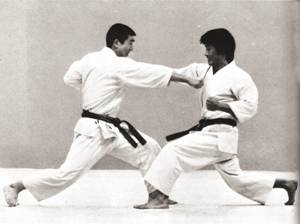
Budo Shiai or “warrior spirit tournaments” (Traditional tournaments) have a specific focus when doing Kata or Kumite….to show the work you are doing to perfect Kihon and application of Kihon. The Ikken Hissatsu or one punch one kill mentality is in full effect here. The idea in Kumite is to be good enough in your techniques to use one movement so perfectly that you would, theoretically, end the fight with that one movement. For instance your punch or kick should be so powerful, well timed and targeted that if it were to land with full force you would render the opponent “Done”. Kata is basically an example of your proficiency as well.

Budo Shiai uses the Shobu Ippon rules in most cases because 3-5-7-12 points is “Over kill” and would take away from the ideology of the perfect Ippon and add a tag element to the competition that takes away from the warrior spirit and mentality of the occasion. Tournaments are also viewed as less than important in the long run, you should be focusing on daily training….the tournament is  simply a chance to show your hard work….not something to work towards.


Geki Shiai or “Play tournaments” are based on a more western point of view. The Kata competition is more exaggerated and selection of the Katas is almost always based on the more flashy Kata available, and regardless of the Kata selected they are systematically embellished and sloppy form is covered with long improper and over exaggerated Kiais and dynamic movements that often have no true Application. The katas are also often outside of the rank syllabus and way outside the true skill level of the performer. Worse, this is encouraged by coaches and instructors to try and garner style points!

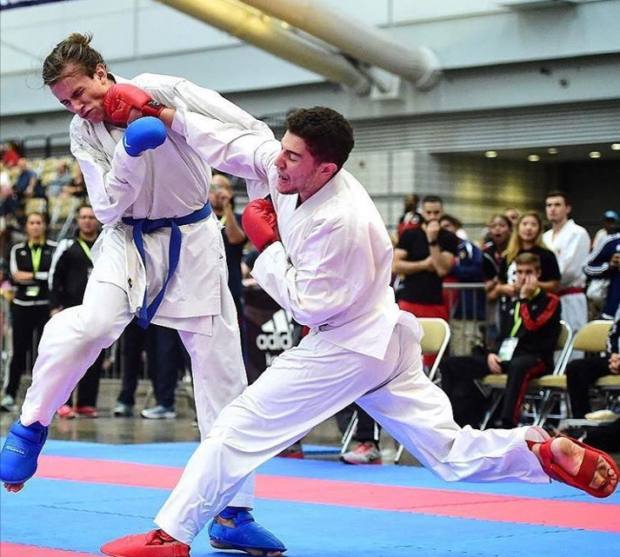
Geki Shiai Kumite is DRASTICALLY different from Budo Shiai Kumite as well. The practical stances are replaced with a side angle stance to allow for more flashy Geri waza (kicking) and also a hopping motion is used in place of the shifting movement of Budo Shiai. The focus on perfect form and execution is removed and now you have a bouncy athlete who is focusing on athleticism and throwing high point head kicks over someone working on form. The point system itself deteriorates the Budo aspect by making it a multi-point game and also awarding more points for difficult targets, and making a head kick more points, you have just put a harder to control technique as the highest point, thus making it more attractive to use and adding to potential injuries. Throwing more “less controllable” head kicks while moving around makes for a more dangerous approach to Kumite.

Another aspect of the tournament point system that weakens it and opens it to a less than Budo spirit is the timed tournament Kumite. I have seen a few tournaments were one opponent scores three or more points than plays run away for the rest of the time. This is NOT budo and the person should be disqualified for that kind of action, and if they are a black belt their instructor should think seriously about letting them wear a Yudansha in their club. I was told that this is a common strategy in WKF tournaments and that if the amount of points is scored to earn a victory, but not enough to end the match the highest score earner will often retreat till time runs out. This is not a factor in a Budo Shiai as the single point system allows for this to be avoided.


Shiai should be a way of showing your true spirit, your hard work and demonstrating your dedication to perfection of the Waza and system you train in. It’s a pride point in your training…..not a system of over dramatic Kata and tag Kumite. You should be demonstrating what you train for in Class and at home, not some fabricated “middle ground” system that waters down the waza and system you should be taking pride in.

History has shown us that multi style tournaments do not work, unless you create a “middle ground” system that everyone trains in, then its back to a single system. In essence the WKF system is a new style, it’s not Shito or Shoto or Goju….its WKF.  Multi style tournaments don’t work unless you change the approach and create a common ground system, thus altering the systems, watering down and altering systems and creating a mixed system. 


Now, WKF systems are not “Bad” and they often lead to more people pouring into the Dojo’s, but they are not traditional and as proof of this I offer that 2 of the Canadian WKF based squads are not even Karate…they are Tae Kwon Do and accepted based on athletic ability and not even being in a traditional Karate program….which you would think would be the PRIMARY prerequisite! The other issue is that bait and switch issue. You promise SPORT and then provide traditional or you promise traditional and offer sport. For 99% of the members of a club they are practicing because they love Karate, it’s fun and healthy…1% will become an athlete that focuses on sport, you need to figure out who you are going to focus on!


For traditional clubs to survive and traditional systems to grow and develop, I believe that they need to focus on the traditional aspects of training and not merge with the other systems to create a new system.  They need to embrace the traditional systems they belong to and not get involved in multi style events, which sounds horrible but the honest truth is that I cannot allow a student of mine to do Kata and be judged by people who don’t know our Kata….the playing field is not even at those events. We need to also push and run our own tournaments, we need to be able to send our members to events and build solid events for the students. I don’t endorse participation in the Kumite as well because it takes away from the warrior spirit, the purity of the exchanges.

For traditonal clubs to have their say in the way that the future represents us as a culture we need to dig in and start building tournaments that represent our ideology and not bow to the new sport spirit that is taking the Karate world off the path, we need to promote and produce quality events and learn from the sport groups marketing, organization and running of events, but we need to be consistent in our approach and our execution of these events, we need to produce officials and train them in how to run and officiate at these events.


The Budoka who practice Karate with the true intent and true spirit know that the true nature and spirit of Karate is reflected in the want to perfect the use of Waza to its fullest, not in scoring points. We realize we are all different and there is beauty in our differences, the sloppy hoppy system that has come about that others train in is not Karate, its Sport Kumite and Drama Kata. As a Budoka, and an admittedly stubborn one, I refuse to change my system of teaching, training and working with students to merge my system with a different style of Karate and create a sport system that encourages tip tap Kumite and Kata that is overly Dramatic. In fact at the tournaments I help organize you get points off for being to Dramatic and you will not score points for flashy but ineffective Kumite. Its how I am trying to maintain my traditional roots.


Wednesday, November 15, 2017

Sport Karate and the down fall of traditionalism


Sport Karate and the down fall of traditionalism

By J.James


            As of late I have been talking a lot about sport karate vs traditional training or Budo style training and how it’s not a good idea to change your views and practice in training. Ironically I have been doing this as we are now part of a provincial Karate group that does a lot of WKF Karate training.

The thing that has bothered me is how this involvement in sport has change the way that traditional Karate people are training and they are creating a new tradition and new mentality in their training, and I am actually not a fan of this. Also the “Sport” style is a merging of styles…again, not a fan of this practice….next the sport body now gives out Dan ranking…again…not a fan of this. I love watching different styles like Goju, Uechi and Shito do their Kata, but the idea that they should all compete against each other in a Kata competition is ludicrous and silly.

I have to explain that I am a traditionalist and I was trained and programed to view Karate as a specific and traditional art. Because of this I have a hard time watching Karate change, I admit it…it’s very hard for me to watch WKF stuff and view it as nothing more than TAE KWON DO, which in itself is not wrong, but the whole thing is a bit of a slap in the face to traditionalists because we pride ourselves on repeated aesthetics that make our style unique. The sport Karate tries to create a generic system that allows all styles to participate but in my mind it causes a “Vanilla” version of Karate.

If you think that this sounded harsh towards the WKF rules, well wait for it. The interpretation of Kumite by the WKF rules is a total divergence from the traditional intent of Kumite and by definition the WKF rules are NOT Karate…which is why Tae Kwon Do fighters often, as in the case of Karate Team Canada, end up on the “Karate team”.  I am not saying that they are not athletic, the WKF athletes are in great shape and can move fast, but the rules that they play with is creating generic version of Karate that waters down or sands down the corners that create the uniqueness of each style. Have you ever watched a Goju person do one of their Kata or a Uechi person perform their Kumite. Its very distinct and very beautiful, how about a Shotokan person doing Kumite or doing Kata…again, a very beautiful aesthetic is created. Now train them to all move the same, turn on a weird TKDesk side stance and kick box for points…not so beautiful anymore.

The bouncy stuff aside, using the Sport Karate rules of needing to make multiple points takes away from the ideology of traditional Shotokan Karate! So what exactly are the difference and why between Shobu Ippon style tournaments and the WKF tournaments. Well let’s look at the rules first and by the rules I want to first explore the Kumite part…then the Kata and you will see how it changes the soul of Budo Karate, then we will define the Sport Karate world vs the Budo Karate world!

      In Traditional Shotokan tournaments or Shobu Ippon tournaments the participant is looking for the perfect technique, the application of perfect timing, power, control, distance and correct movement to create the feeling of “ikken hissatsu” or one punch one kill. The idea is that one movement earned you the fight, your reverse punch to the face/body was so sufficiently created that your fight would be over in real life. You have reached perfection in your technical application.


      To be fair the JKA and many traditional tournaments do use a “Sanbon Shobu” event or “first to two points” kind of set up for some events, but the more traditional is the Shobu Ippon or perfect one point event. To score a point the attack must “land” or be targeted to Jodan or Chudan (Head or body) and points are equal if you target the head or the body. The movement must have the following criteria; proper execution of power, distance, timing and correct posture, concentrated mind and spirit and proper frame of mind and execution to the proper target.

      You can get an Ippon also if you counter powerfully, knock your opponent off balance, you catch your opponent so well that they cannot defend themselves or you use a combination and all the attacks land. You can also put together two ½ points or Waza-Ari into a full Ippon to win the match.

If the techniques are not perfect, lack some of the requirements the attacker may be issued a Waza-ari or half point. Because of these rules the Ippon focus makes the individuals focus more on execution of the perfect technique over just throwing massive amounts of unfocused techniques at their opponent. The idea is striving for better Waza and the perfection of the mind and body in doing so. Sounds kind a hookey but its true, that’s what Kumite should be.

Now WKF rules are a lot different, First off you can score an Ippon which is worth 3 points, a Waza ari worth 2 points or a Yuko worth one point. How you score these points is very different. Yes you need good form, sporting attitude, vigorous application, good timing and distance but Ippon is only awarded for a throw or fallen opponent or a head kick! Waza ari is scored with Chudan kicks and the Yuko are given for punching or striking……never mind if they are perfect or not. In order to win you must have a “Clear lead of eight points” or the time runs out, then the person with the highest number of points wins.

When you are doing the WKF rules you are trying essentially to tag your partner more than they tag you, and use techniques that are more flashy and exciting like head kicks to do so or sweeps and throws then tag your partner so you can gain more points. The focus is taken away from perfection of form and functionality and put towards scoring points. Watching the WKF rules tournament I can say that the focus is definitely removed from perfection of Waza and replaced with a tag style mentality. Also, some of the competitors score a higher amount of points then play keep away to run out the time for the match; both of which take away from the true Budo spirit of Kumite.


      Kata competition is another world as well. With Kumite I can see opponents from different styles competing against each other…Kumite is Kumite after all. However we now run into a different issue in judging Kata. I have been doing Karate for 37 years (maybe a bit longer) and I can confidently tell you that I have no hope of judging a Goju Ryu Kata or Uechi Kata with any kind of confidence or competence!  I also may feel that I can recognize different Kata from Shito and a few other styles but I have no business judging a person’s form in a style that is different than my own, nor does a Goju, Shito or Uechi person have any business judging a Shotokan guys Kata.

The JKA outlines 10 major criteria for judging Kata and right off the hop they basically say you need to KNOW the kata to judge the kata. The first criteria is proper sequence of movements. If you have never studied the Kata then you don’t know if they are doing the right movements! Goju/Uechi/Shito practitioners that do Kata at the WKF training level have a plethora of Kata open to them that I have never seen or trained in and I would not feel comfortable judging these kata.

The next few criteria for Kata in JKA rules tournaments are athletic in nature; levels of strength, Contraction and expansion of the body and proper seep, power and accuracy of technques, posture, balance, stance and accuracy of use of the “weapons”. Flow and synchronization during team kata all make up the basic criteria for the Kata. Watching JKA kata for me is also a form of dramatization of the characteristics for each Kata. Empi needs to look different than Jion ext. I personally love good Shotokan Kata, its dynamic, explosive and shows great form….and its something I am used to. I get very uncomfortable watching other styles Kata as I know I am critical of them and bias against them, and I also don’t see the aesthetics I am looking for in the Kata.

WKF Kata rules are much the same but there are issues with the application of the Kata rules. First off, and most importantly….the competitors can choose from any of the Ryu Ha style Kata. And I have seen Shotokan style competitors start dipping into different Ryu ha kata in an attempt to stand out as different. The result is a “Shotokanized Goju Kata” or other styles Kata. This looks strange to both Shotokan and the other Ryu Ha’s membership. My feeling is that you should be selecting from your own styles Kata base and not trying to do a different Ryu Ha’s Kata. Also, I know of several “Shotokan” style members who do only Kumite and don’t even know a Kata from their own Ryu ha….you are not a black belt in Shotokan if you cannot do Shotokan kata! Nuff Said on that!!


To score points in Kata performance for WKF you need proficiency in three different areas. First is conformance…..Are you doing the standard Kata from an accepted Ryu Ha! In other words did you pick a kata or make one up! The WKF traditionally has been very lenient in this regard. If you pick a known Kata or can demonstrate it comes from “SOME” group then you can do it. The old required Kata are out the window and now you can do almost any Kata….regardless of your back ground.

Technical Performance is Much more important than picking an appropriate Kata! The judges look at stance, techniques, Transitions, timing, correct breathing, focus and Technical difficulty….like diving! So as long as you look great…..you get points. Next up and more important to WKF in my view is the Athletic performance. The “performer” must show proper strength, speed, balance and rhythm. Never mind that they don’t know the Kata the judges will look at what kind of athlete you are while doing the Kata.

Having watched high end JKA competitors and regional competitors as well as WKF rules competitors the two things that I can say about Kata competition is first off EVERYONE DOES UNSU TO DAMN MUCH! What is with doing Unsu for every match or Sochin as a close second. The JKA syllabus has 26 Kata in it, you surely can find a unique Kata to do for the tournament other than the one that EVERYONE is doing! And secondly the JKA guys blow the athletic types at WKF out of the water when it comes to showing proper execution of power and timing!

One of my other pet peeves is the “Fibered up” requirements for the Kiai in WKF tournaments to sound like the person is trying to pass building material while doing Kata! For me this also smacks of TKD style forms were the practitioner Yells and yells trying to show spirit and showing a complete lack of knowledge as to what Kiai is used for and should sound like!

      The last WKF rules tournament I went to I saw some very intricate WKF Kata being done from what I can only guess is Shito ryu, but the Kata was unimpressive and looked like a dance with no real applicable movements. Yet the person doing the dance won first place. I think Kata has to look a specific way and the student doing this Kata  has to understand it as being training for fighting not performance art!


            The next thing that I noticed after years of using only hand pads and a mouth guard was the LEVEL of foam gear that was being used by WKF rules competitors. JKA rules or Shobu Ippon rules states that you must have a mouth guard and hand pads to compete, that’s it. I have competed with this gear for a long time and never been seriously hurt during matches. The focus on control and single perfect techniques helped stop a lot of us from flailing and hurting each other. Extra foam was always seen as a bit of an insult, meaning you did not have the right level of control! After hundreds of competitions I can only remember one or two accidents that lead to injuries.

            WKF rules state that you need special hand pads, mouth guard, shin/instep pads and in some cases chest and head guards. The limited time I have seen competitions using this kind of Foam dipped in plastic I have seen more cuts and pulled skin, more  impact related injuries because people now lack the control that we ask for in Shobu Ippon tournaments. Also I see more flailing and praying for points at this level and a call for more head kicks as ways to score points has led to more injuries due to dangerous techniques that the Shobu Ippon rules.

            In WKF rules more points are scored with dynamic head kicks or using poor controlled moves than the JKA rules that see more points from Gyaku Zuki and other more controlled attacks. This is the key difference created by the point scoring system. If we focus on control, better form and functionality over tagging someone for points we will be much safer. This is why I discourage most students from doing the WKF rules tournaments in favor of sticking to JKA rules or Shobu Ippon rules Kumite.


            I get a lot of “this is traditional Karate” style arguments or “This is how multiple styles compete against each other” kinds of arguments. The truth is that just because you have a picture of a founder on your wall does not mean you are doing something that the founder would even recognize as traditional. WKF rules training is so very different from what we are taught in the JKA and the JKA was founded on the principle that tournaments were needed to draw in more students. The WKF took the JKA or traditional rules and made them more sporty, for some this is fine, for the rest of us this is confusing and counter to what we teach in the Dojo.

            I always ask myself if the practice or application of rules at a tournament comply with my ideology of what Karate is. Does it enforce the idea that your style must be applicable in a real situation or does it encourage a style that is not applicable and trends towards a sport environment and application that would require a compliant attacker. In other words does your kata look real and would it be useable in a defensive situation and is your Kumite training real or just patty cake sport Karate? Too often the answer is that its fancy and it won’t be useable, its “creative” and fun but not applicable…you just left the realm of martial art for the arena of sport Karate.


            My focus when I teach and train in Karate is to work on Budo Karate or what I call Showa Karate and to apply the principles of this to everything I am doing. Budo Karate people can use sport as a tool to learn and apply, but only if the rules are set up to reinforce this principle in training. Non-Budo Karate lives in the sport field and they play patty cake or tip tap to score points. They don’t have a true understanding of Budo because the rules leach this ideology out of the training itself.

            Training in Budo/Showa Karate is challenging, rough, repetitive and challenges the mind and body. It looks simple but teaches lessons like patience, persistence and proper Karate waza. The application is often seen as brutal and direct, the relentlessness of training is criticized by many as overly harsh and often instructors are seen as task masters who push students to perform thousands of repetitions of a single movement before moving on. The sport coach is doing fun drills and setting up students to work on dynamic things and constantly giving positive feedback. The honest truth is that traditional artists will be very good at the few techniques that they work on, they will have great form and application of the movement is almost a reflex. The sport persona will have fun and use much more dynamic movements, but fail to gain the deeper understanding of movement and application. However the training is much easier to sell and Dojos are full because of this. However in a real life situation the traditional student can upholster the basic waza they train in and use it.  Kihon practiced until its reflexive is the martial way!


            Okay, so why am I so dismayed at the WKF/Sport Karate and why is it not okay in my mind. Two things….One its not traditional Budo, which is what the Karate systems were essentially trained as.  Budo Karate is a special kind of training. It does not matter if its JKA, Other shotokan, Shito ryu, Goju ryu or other styles, the ideology of the training is the same. You train to improve your mind, your system is done in such a way that its applicable and you train to perform realistic and repeatable movements. I think of people like Mario Higoanna Sensei who is a Goju instructor, his Karate is Budo! My lineage is budo as well. We don’t suffer sport Karate types well and we see the holes in the training and methods. Once sport is gone so is the student!

            We are really facing a whole generation of sport Karate students who will be lost to Budo/Showa Karate if we do not act to counter this. As instructors we need to focus on more traditional Shiai training for our sport outlets and we need to build our students understanding of Budo/Showa Karate with more focused training and talk to them about the training being about mind, body and spirit not just gaining medals and we need to educate the public about the execution of one perfect technique over playing Tag with our students at tournaments. Now after all of that, WKF rules may not be my cup of tea, and its truly the spirit of the training that is important. I feel that tournaments are a good thing, you just need to adjust your thinking and focus on budo training with traditional rules that make sense and are geared towards your ideology. More sport Karate is not the answer, more Budo/Showa Karate is!