Tuesday, July 03, 2018

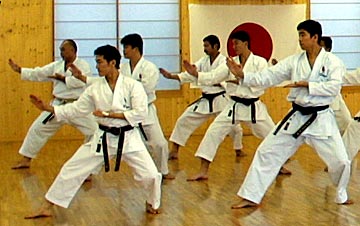
Traditional progress in training.


Again, I am admitting that I am a bit of an old fashioned guy when it comes to my Karate training. As part of that adherence to the old ways of training I take pride in monitoring and managing the training of my students. I don’t teach them things that are beyond their current skill set, I used to think instructors who let their students learn Kata way outside their training level were bad instructors….I now think that they are just misguided. Students learn at different paces but when you attend some clubs you see brown belts doing advanced Kata way outside the curriculum and they normally…are not doing them well.

                Growing up in Karate we were told to train in your own lane, or to keep your nose in your own book. Basically we were told that if you were a white belt you did Heian Shodan (Granted now things have changed a bit with rank requirements, but you get the point) and you did not do free style Kumite much or work on any Kihon that was just outside your ability. This was supposed to help bring your skills up to the next level and help you improve your skill set slowly, get you ready for the next step and not rush you or let you jump to far ahead.  It worked well and the curriculums were cemented because of this. The JKA has even gone to great lengths to improve on this ideology by including more junior ranks, adding Taekyoku to the mix and addressing the need for better Kihon by slowing down ranking in the Kyu levels.

                Now I see brown belts learning Sochin, not just having fun with it but honestly learning them for training and competition purposes. I see purple belts learning Kanku Dai and I see Orange belts working on Jion. It’s maddening for someone that knows that they are not ready for this leap. They are not technically mature enough to handle this and it shows in the demonstration of the Kata. This also draws away from their training on the curriculum.  Most students train 2-3 times a week maximum, they are not in the Dojo every day like we were in the old days. I would be doing Bassai Dai (when I was a brown belt) 4-6 times a week in class (most times 2 classes a day when I could) and on the week end I would slip into the club (I had keys I was not breaking in) and do more of the 15 Kata but always Bassai dai over and over. This added up and over time you begin to internalize the Kata, but the new students only get 1-2 classes a week in some cases and they don’t work out on their own, add into the fact that some are now doing Sochin, how well do you think they get to know their grading Katas?

                I also see young orange belts doing Jiyu Kumite at tournaments and I physically flinch when I see the horror show that is in front of me. They barely know their own body or the techniques and suddenly they are hitting each other and throwing horrible techniques, some get hurt from the hard impact and some get hurt from twisting joints the wrong way. The instructors shrug and say that they are accidents, but they are preventable. The instructors say that the students want to learn the advanced Kata or Kumite training…so? Students are STUDENTS they should be taught the basics, given a solid foundation and then when they are ready they should be taught the next level of techniques or the next Kata or given training in the next level of Kumite. Until that time they should be working on the fundamentals for THEIR level!

                We use rank belts to denote rank…this is the level of understanding a student has and what they should be working on.  The Niju Kun was one of Funakoshi Sensei’s greatest compilations of work that he left to us. In the Niju Kun it says “Karate do no shogyowa issho de aru” or Karate is a lifelong pursuit. As my instructor used to say “Karate is a marathon, not a sprint”! Don’t rush to know things above your skill set or outside of your own syllabus, instead focus on the core fundamentals of your Karate.  As students and instructors we have to step back and focus on the things that will make solid Karate-ka out of our students and not rush to learn above our grade. Funakoshi also said “Hita kata sanen” or “one Kata….three years of training”.  We don’t come close to this kind of training today, more like “One Kata…three months of training”.  For our part the JKA has slowed progress and JKAMB has slowed it even more. We now focus on the improvement of Waza over fancy training and we teach students patience, perseverance and focus on improvement.

                What strikes me the most as an instructor is the students focus and insistence on advancement in skill when they simply are not ready to move forwards. What strikes me as a student of the arts is that some instructors are blinded by the same need for advancement as the students are. They don’t see that the goal should not be on doing the next level Kata or getting the next color belt, but on perfection of the weapons and systems we are training in.  My instructor always said that you have to learn to crawl before you stand, you need to perfect standing before walking and you need to walk well before you run, or your running will get you hurt!...okay, it falls apart at the end but you know what I mean.


                I remember going to Ottawa  a bunch of years back and Tanaka Sensei had brought with him the students from a university he taught at. The students for the most part wore white belts, the odd member of the troop was wearing a black belt and was shown a great deal of respect by the other students. We had a tournament that year and I thought that it was going to be a bunch of white belts all competing against other white belts, but the white belts were all lining up to spar with seniors in the Canadian group. I was rather perplexed by this and scared for the white belts, whom all looked eager and friendly enough…My thoughts were that they would get torn up and think us mean people for making them spar against seniors…the funny part they did not look scared at all and Tanaka Sensei did not seem upset at all that they were going to face Saeki Sensei’s seniors.  Then the tournament started…..

                A curious thing happened, the white belts were all lined up and one by one they did their Kata against a Canadian counterpart, they all did Bassai Dai…white belts doing Bassai Dai….and PERFECTLY. They were sharp, snapped and had perfect form and waza. It was a bit embarrassing watching our best go against white belts and not really match up! They Canadians held their own in Kata…..but white belts were making our Senior brown belts look pretty bad! I watched the Kumite matches go on and saw perfect speed, execution of waza so fast and accurate it was scary so I had to ask Mrs. Saeki who the heck these kids were!

                Mrs. Saeki explained to me that the kids were all senior brown belts and black belts with the university that Tanaka Sensei taught at, those wearing white belts were because they refused to wear Kyu level rank belts we normally see.  They have only worn white belts and one of the students was waiting on seeing if he passed his Shodan (which I am sure he did) and was going to wear the white belt till he got the okay to wear a black belt…..all this confused me and really struck me as totally strange!

                The students who came with Tanaka Sensei valued the training and process more than most of us in Canada were. They practiced every day for an hour (on the week ends….4 hours on week days) and I was told that the training was mostly Kihon, basic Kumite…not much Jiyu Kumite and a great deal of Kata work…nothing higher than Bassai Dai however. They were ANIMALS.


                Fast forwards to a more recent experience I had. I was talking to a friend on line and they were saying how great the students they trained with were doing, some were fresh Shodans and were training for nationals learning Unsu! I was floored! Then I watched the aforementioned Unsu…and it was obvious to anyone with half a brain that the students should not be doing Unsu. The problem is that instructors rush their students to try and keep them entertained or for fear of losing them to others who will let them push beyond their acceptable skill level. This to me is the epitome of stupidity! Never mind that someone may get hurt or that the school is watering down the training. The students are getting ripped off! They expect traditional standards, traditional skill development and they are getting fast food martial arts.

                A friend of mine once said sport training was important, but roots in the traditional essential. My goal is to focus my students on the traditional essentials, the fundamentals and build both my foundation to be strong as well as those of the students. Students should be focused on learning, working and polishing the basics and the instructor should be holding them back from their natural tendency to push to hard forwards and they should be working on ingraining and hard wiring basics to the students to ensure a proper base in training. This is traditional Karate training and proper progress in the art of Karate.


Tuesday, June 05, 2018

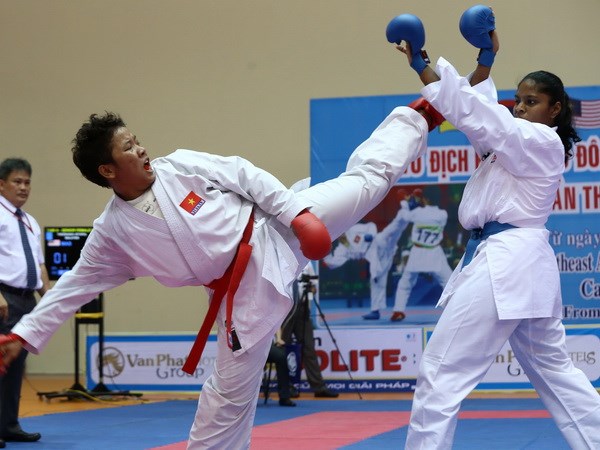
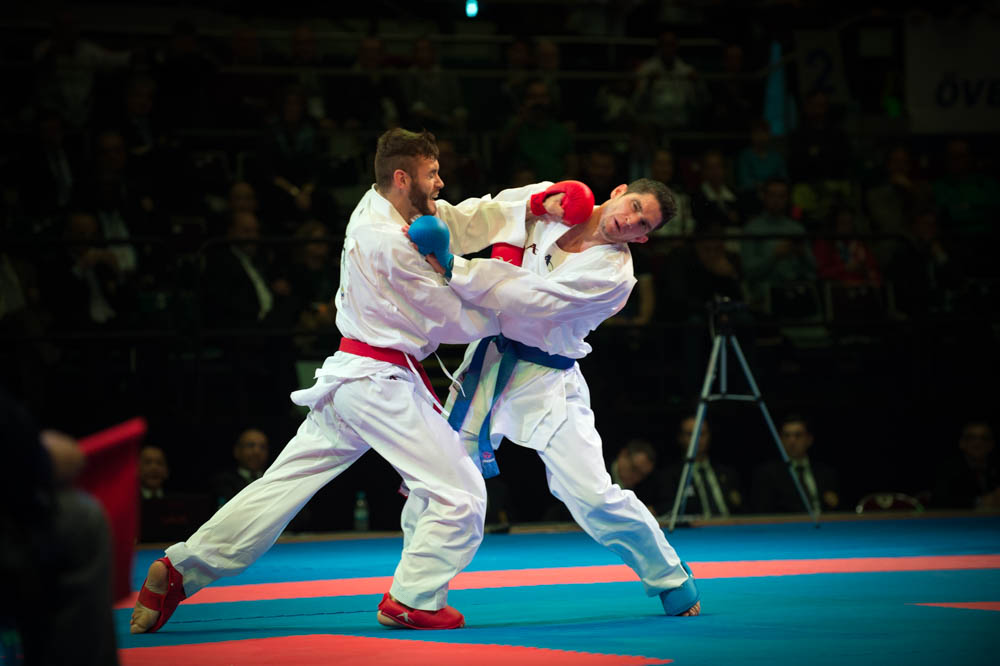
Difference between Sport and Traditional Karate.


                The other day I was approached by a parent who said they “Don’t want their kid doing no sport KR-atty, just the Traditional stuff”. I was first floored that the parent knew that there was a difference, then I noted that it’s Not KRATTY, but Kara-te!  I mean Sheesh!  But seriously, Every few months the subject of “Traditional” vs” Sport” Comes up and I end up having to revisit the subject for people.

                I have covered this subject in the blog previously several times and honestly its getting old, and I had hoped that the idea of “Sport Karate” would die eventually but it seems, much like a cancer, to be growing and sticking around. The scary part is how many “traditional” students and instructors slip over to the other side and then drink the cool aide or whatever causes this “Haze” and they forget their roots.  One of my friends points out that it’s the marketability of it, but I would counter that being traditional is even more marketable…especially to the parents of kids.

                Before we move forwards with the differences I wanted to point out that some cross over does exist, you cannot deny that we all have four limbs and move relatively the same, it’s the mentality, focus and purpose of the two different systems that make them unique and separate. Also, some will bill it as an evolution in Karate…Poppycock! It’s simply not!


                Original, Traditional, Budo, Goshin….whatever you call your “old school” Karate training its purpose is to create better people….either physically or mentally….or spiritually. The focus of Kumite is “Ikken Hissatsu” or one punch, one kill. This is the fundamental ideal for the practice of “old School” Karate, Training with the purpose of developing the perfect technique.  The reality is the pursuit is endless because perfection is not actually attainable, but the ideal of training to polish and “perfect” is the ideal behind “Old School” Karate.

                It is true that the original goals of Karate all boiled down to being able to defend yourself against aggressors, the goals changed when the need to defend yourself lessened. Training is now almost a physically spiritual venture in which we try and “Beat our Souls up and make them better” as one of my students once aptly explained. The ideal is not to gain points or to train to get a dangly medal around our neck.  So, then whey do we do tournaments?  TANREN! Its about forging ourselves, testing our metal and pushing ourselves to the brink so we can improve. A Traditional tournament is a time for students to step up and show not only how hard they have worked for the tournament, but how hard they are working in the club on a daily basis.

                Traditional Karate does not use fancy cycles and the students don’t take summers off to relax and go to the beach, well they may go to the beach to relax…but generally they just came from class…or they are doing Kata on the beach. The point is that traditional Karate does not take a break, it does not “Ramp up” or “Cycle” training, it’s a continuous effort to improve. The goal of “Old School “Karate is to be better….period.


                Sport Karate is a short term endeavor. Unlike “old school” or Traditional Karate you only have a short time training and competing before you “Age out” or stop training to compete. This is when your normally training kicks in, or you leave Karate. The training is designed strategically to get you in great shape and teach you to score points, or as one of my instructors once said….”Play tag”.  You are not looking for the perfect technique, just one that will give you one of several points you need to win a Kumite match. No emphasis is put on performing a technique perfectly, other than making it flashy as it can be. The value of Sport Karate is in the training, the short term pre-tournament training that pushes you to your limits to be in great shape. Other than this and the entertainment value it holds little to no actual value to a student.

                Historically the Sport Karate grew out of the Japanese trying to mix styles. See its very difficult to judge a solid Shotokan Kata or Shito Ryu or Goju ryu…heck any Kata next to another styles. Even the Kumite techniques are a bit different. But the systems to allow for different style practitioners to train and compete against each other was created to allow for this very thing to happen. At this point the ideals of self-defense, Ikken Hissatsu and any other key and fundamental ideal of value were left on the curb to allow for sport.  I am not ragging on other styles, I love watching the elegance of Goju ryu and even other styles as they do their Katas. They are not my personal preference but I love watching them.


                The objective behind traditional Karate is self-defense and survival. This is based on the concept of the finishing blow, meaning training so that one strike is sufficient to render the attacker unable to continue attacking. In traditional Karate tournaments the point is only awarded to the person that gets the “finishing” blow, or a half point for the person that comes close to this. The purpose of the encounter is to develop the mental and physical ability to deliver the well balanced, technically sound strike with the right mental attitude to emulate this “finishing blow” mentality. Sport Karate however is more about playing tag and scoring multiple points. Points are awarded to the fastest strike regardless of the viability of the technique. There is no need for a finishing blow in this case as they are more concerned with accumulation of points. Traditional fighting is about cultivating the fighting spirit and win the battle, the sports focus is on scoring points…and winning medals.


                From a technical stand point the sport Karate is fluid, lacks Kime and is geared more towards athletic builds. The training is designed to work techniques that will score points for those that can build up speed and often lacks control in delivery. The athlete is reactive and will train in a variety of skill winning techniques. The training focuses on explosive movement but little attention is paid to control or focus. The Kiai is used more as a way to alert the judge/referee that the competitor feels they scored a point. Traditional training may focus on as little as 5 techniques to perfection, with perfect timing, Kime and control. The student will review, repeat and develop these techniques until they are reflective and automatic. Timing and distance are all taken into training and often the student will be focused on these techniques exclusively and will be able to deliver them at multiple angles and use them in real defense situations.  The focused training makes these waza (techniques) deadly in defense situations and very effective at tournaments.


                Both tournament and traditional training have their value to the students but different greatly in their approach and objectives, set up and techniques. To put it simply “Traditional Karate is an art, whereas sport karate is a sport”. One aspect that traditional Karate often lacks, especially today in modern Dojos, is the lack of “Fight” or need to survive. When I started Karate the training in the club was so harsh that many dropped out because of it. Modern Dojos will turn to sport to introduce the feeling of danger to the training. However sport minded clubs turn out athletes in great shape, but they are performing a routine and often have a hard time transitioning to a more “goshin” style mentality when needed or perform as if they are doing sport karate and fail to defend themselves. Much like a boxer striking without hand pads and gloves the first time a Karate player throws a technique to defend themselves they are left realizing they have holes in their training.


                One of my biggest beefs with Sport Karate (WKF style or multi style events) is the Genericafication of the systems that they are practicing. It is impossible to participate in a Multi style event and maintain your traditional presentation. I have seen Shotokan people doing Goju Kata to score extra points when they feel that the judges are all Naha based practitioners at heart. This feeling of structural fluidity takes away from the strict style system that has been a traditional pride point. Also the over exaggerated Kata performance that the multi style events encourage takes away from the structure of the traditional Katas.


                This is not even mentioning that the traditional tournaments are much safer as the students are focused on controlled use of waza while the sport participant is taught to score points with dynamic and dangerous waza.


                While I am obviously in favor of the traditional tournament, I believe that some value exists in the training for events. I myself do conditioning and encourage my students ( I do it in class) to do conditioning such as TABATA drills and such. However I believe that the dangerous practice of “Tip tap” Tournament techniques and lack of control is a major detriment to the student and any dojo that uses this training as a focus. While it is exciting to watch often, and ignoring my obvious traditional slant, I think that the athletes are very competent, any Dojo that takes on the more dangerous training is asking for trouble. Injuries will begin to mount and one major accident could cause you to lose your club!


                In place of the more dangerous Multi Style sport Karate a Dojo should instead adopt conditioning that intelligently builds up fitness and ability in a student while spending 75% of the time on control and technical proficiency over explosive and dangerous sport training. One must find the balance between intelligent training and conditioning in the Dojo.


Tuesday, May 15, 2018

Karate Poison!


Karate Poison!

                I have been doing Karate for a long time, 37 years! And for 20 of those years I was HARD CORE, we are talking 7 days a week at points, 2-3 classes a day!  I was so submerged in Karate that my whole thought process was about Karate. I was lucky, I had a great instructor who taught me a lot about the way Karate should be done. He was someone that took great pride in doing the right thing all the time, even if it was not the right thing for him politically or financially.

                Now Sensei was not perfect but he recognized that in order to teach Karate you had to have personal standards. You had to present yourself as above the issues and you had to recognize the poison that affects Karate. There are many poisons that affect Karate in general and ones that seem to be flourishing. Most of them are a reflection of our society and normal human nature. However some are more specific to Karate. Here are my basic 8 poisons of Karate.


Politics

                Politics are the poison of all things really. I know they are essential in running an organization, which I will get to in a bit, but they also create tension and issues that would be slightly less pervasive if not for the politics of Karate.

                Karate should be a dictator ship, a Sensei at the top of the food chain (Dojo) and then everyone who follows him. It’s the best set up for a Karate Dojo. Then you look at organizations and you should have the same set up, a president and a bunch of worker bees’ however what ends up happening is in fighting, Cliques are formed, power is seen as up for grabs if only you play the game. It’s sad!

                Politics need to be kept out of the Dojo and organizations should run like a company! One head guy and the rest follow orders and move to improve the group over all without working to gain things for themselves. Too bad with politics comes corruption and that is bad news for students, the clubs and the organizations that suffer from this poison.


Rank Grabbing

                Along the same lines as political power grabs are rank grabs.  I have known many people who Organization surfed to get further ranking. They hit a glass ceiling in one group and jump to another to get another notch on their belt. Honestly I don’t honor any rank over 5th Dan for technical knowledge anyways, and 6th Dan for political “Gifting” of a rank.  I know far to many 9th Dans who are not worth a pillar of salt and a few 5th and 6th Dans who are complete idiots.

                Rank is “Rank” as I often say. Once you get a black belt and have mastered the basics you are now studying the innards of Karate and working towards a better understanding of its inner workings how it applies to your body. Nidan is the fighting rank, you should be able to do fairly decent Kumite and Sandan for me is the pulling together of the whole thing. 4th, 5th and even 6th dan are mainly teaching ranks that show you understand the system you are teaching well. Anything above that is just political.

                I know far to many people who train to get rank, its sad really because they miss the whole point of it. Kyu level I grant don’t know better and honestly the ranking at that level is understandably all about Waza improvement. But after 6th Dan, well its just political gifting or self-gratification.  Focusing on rank and letting the obsession take over your life is a second poison of Karate.


Organizations

                Organizations in Karate should serve the students. They should work to develop extra training options, bring in instructors for variety, create tournament training options and help organize students grading. They legitimize ranks when possible and they focus on keeping the technical level higher.

                However, most Organizations FAIL in this horribly, especially the first part. The organizations tend to change and become about ego for the leadership, power grabs and they fail to recognize that this is all about the student base….not the leadership. Organizations are best made up of Dojos that run independent of each other and work together to build up training, the leadership made up of equal votes from each club…..each club being a dictator ship. OR they should be all run by one leader who makes all the decisions based on what is best for his organization….however both are flawed and over time I have found that organizations end up becoming a big disappointment and fail the membership horribly.

                I have been a member of FEW organizations that were not Poison! The organizations that I was part of that were not totally poisonous were led by strong leaders who did not goof around trying to maintain power, they just led and crated good training. They however are few and far between. To many leaders are self-conscious and paranoid about losing power. They lack integrity and they often are power mongers. The few I know who are not, lead smaller groups that just want to train.


Racism and sexism and worse.

                This one is not as prevalent in most Karate groups, but it’s out in the universe of Karate groups, as is sexism. Thankfully I have never really been the target of racism in Karate, which as a short white guy sounds funny but it’s a reality for some. I have seen Japanese instructors pass members up for positions and rank because a Asian was up for the same position, or a the person ranking was a lady and how could she get a rank that a guy had.

                I have of course also trained under Japanese masters like Saeki Sensei who shows NO prevalence towards these types of behaviors and is one of the most fair people I have ever met. However I have seen some leaders and instructors mistreat people, I have been told by a few female Karate-ka that they were sexually harassed and I have seen people behaving badly when it comes to kids and people of other back grounds.

                To me this is a perfect example of not understanding respect. As an instructor or senior we must show great respect to our students. Granted they must return the favors but I am a big advocate for first respecting them. This means give the respect that is owed before you expect it back. The lack of respect, racism, sexism and ego issues area chronic poison in Karate.


Long distance training

                This one will seem strange, but it will make sense to you in a second or two. I see a trend happening that seems to be a mix of changing organizations to get ranking and seeking to train under famous instructors…when you live literally a world apart. I have seen this manifest several ways. The first is someone applies to a group that has no one in their area, they get approved and then they train less than 2 times a year with someone from far away…..if ever. This to me is a waste of time and energy, if you want to be part of a “Named” Group then simply make a name for yourself, its sad when you join group “ABC org” just to put that on a fancy patch.

                The other manifestation of this is distance grading/learning. This is a new “Technology” based push that has come about in the last few years. I have seen people grade for Shodan, Nidan and Sandan by sending in video of them doing the syllabus for the group. Its kind of sad. They get rank and never meet the person that supposedly ranked them.

                Honestly it makes me feel that instructors need to shake their heads a bit more. The traditional ranking system was an instructor teaching and giving out rank based on the interactions of the instructor with the student. They did not grade anyone they did not personally know and train with let alone give a black belt ranking out to someone they did not personally know. It’s a sign of the disintegration of the meaning of rank when you see this.  I know of one person who received their Dan ranking by attending one camp then sending in a video of themselves doing Kata and some basics. They think that this is legit but in most of our eyes the person is a brown belt that got taken for a ride.

                I don’t think you need to train every day with an instructor but you should know the person and have trained with them a few times before they give you rank. I also know that the JKA sends out rank instructors to provide ranking to people. The truth is your local instructor goes to bat for you during these and says if you should or should not pass. It’s not JUST the instructor who is giving you rank. And honestly that is fine with me.

                The new trend of Long distance training removes the personal attention an instructor gives and makes the whole process about one desperate person looking for help…and the other looking to pad their bank account. Its poison alright.


Karate for sport

                Karate was not created to be a sport, while it can be changed and altered to be a sport it loses its soul when this is done. Yes you can have Karate tournaments that challenge students, give them something to focus on and helps them get hyped up for training. But the modern trend in Karate is to do tag matches that make you work to 5-11 points. This means, by the old interpretation…you must deliver 5-11 perfect “Killing blows” to an opponent with perfect control.  So….we need to kill them 5 or more times…..last I saw if someone dies they don’t come back…we are not cats! I partially kid.

The fact however is Sport Karate has sucked the very soul out of most of the students training. They are taught a very dangerous form of tag that instructors sell them to make them day dream about being in the Olympics or some such crapola. The facts….and I do mean FACTS are that 99% of people walking in the Dojo will NOT get to the Olympics…and 98% of them won’t get to an international tournament and compete….maybe 95% won’t make it to nationals and that’s just the facts.

I call this sales pitch the “Tiger woods” sales approach. An instructor waives the “Carrot” in the face of students saying that they “could” be Olympians if they train hard and they pay a lot of money for that…travel and participate in special training. This “Marketing model” often pays off and gets students in the door. Back when Woods was the guy to be it brought THOUSANDS of kids to golf, a sport normally reserved for retired older business men then saw a boom in participation…but at the end of the day 99.9999% of those kids forced to wear golf clothing and swing at the round white ball on countless driving ranges with overpriced golf clubs and then taking expensive personal training and coaching….ended up NOT being the next “Tiger Woods” and it was a harsh wake up call.

Karate sport is going to be the same thing. First off it’s NOT GOING TO HAPPEN.. your students will NOT be Olympians. I never really billed Karate as OLYMPIC sport to market my club, why…because it’s a pipe dream! WKF style Karate has three things working against it. First off its PURE SPORT which is not what most students are looking for. Secondly it’s a limited time training process. This means when you age out or get hurt and cannot train any longer or just simply give up on the fake ideal of being and Olympian…well you are done with training…and that’s a shame. Secondly its intrinsically more dangerous than traditional training because it’s a TIP TAP game of tag that includes uncontrolled and covered limbs that will lead to injury.

The local organizations are going to vie for the 1-2 spots that the National Team have, and most will be given away already. Secondly you are not just competing with your own system of Karate…you are competing with Wado, Goju, Shotokan, Shorin, Shito ryu, Uechi ryu and those that are Tae Kwon Do athletes that spar at a high level. The fact is that the whole WKF is skewed towards the Shito ryu athletes as they make up the hierarchy of the WKF these days. If you belong to a traditional Karate group your athletes will have to abandon the traditional roots and style to become WKF “skilled” For Kata and they have to change their training and adapt to it.

It’s not just WKF, it’s any system that promotes sport over traditional training is taking the soul out of Karate and changing the intent of training.  For this I state that sport Karate training is a poison in Karate. Now, traditional tournaments and those that put emphasis on the true spirit of Karate are not, actually the opposite. Traditional focused tournaments reinforce Budo training and the true ideals of Karate training. That goes for ANY Style of Karate!


The Genericise of Karate

                This has been something that I have disliked from the start of the Sport Karate movement, and its something that haunts me when I see people slipping over to training in WKF or other sport Karate. The intrinsic components that make each style of Karate unique also give them their character. I am a Shotokan student/instructor who loves what makes my training Shotokan. However I also like watching really good Goju Ryu style Kata and The flowing movements of Wado ryu and the hard Kung fu system that is Uechi Ryu. Each movement, each interpretation of movement skills and each dynamic that makes the Kata and functionality uniquely that of the style it comes from is interesting to me.

                However the recent trend is to shave these differences away and create a generic system that is meant to meld with what other practitioners are expected to do. A Shotokan person who does traditional Kumite and Kata according to the traditional training now must “Adjust” their Kumite style, work on multiple points and abandon the syllabus and style of Kata to now fit the new system that sees Shito, Goju and others abandon their syllabus and style to also be able to compete against other styles.

                Back in “the Day” when a Goju person did Kumite against a Shotokan person or a Shito Ryu black belt sparred against a Wado Ryu person (Ext) you could tell what system they came from based on their style in Kumite. Also students used Kata to learn, they learned them in-depth and the “performance” was meant to show their own style of training. Now the Katas are all changed to be more athletic, the timing is altered to make them more exciting to perform….who cares if the timing is done now in a way that makes the application of technique questionable at best.

                This is Genericise of Karate, the removal of years of traditional systems and styles to allow them to be used to compete against other systems. This removal of tradition is then give merit by creating a organization to support it, and rank provided by people who directly advocate for the watering down of the systems that make up the organization. It’s a case of the organization creating a system to train in, and not a system of training generating an organization to lead it.

                The poison that is Genericise of Karate is actually  a poison for all systems of Karate. The art of Karate, its many beautiful branches, was never meant to be a single unit. It was never meant to be an Olympic singular sport like boxing, Tae Kwon Do or Judo. It’s a plethora of personal systems, of traditions that should not be disrespected by Genericise.


Modernization of Karate

                Modernization of Karate is another similar issue and cancer that we face today in Karate. It’s often presented as Genericise but because it’s often a single system that is “Modernizing” it is different enough to warrant its own comment. Modernization is when a system or club moves to remove the traditional base of a system.  They often present this as “Evolution” or “revolution” of a system, it’s basically a pasteurization presented by people that have not been able to see the value of tradition.

                Modernizing Karate is like saying you will take a painting by a famous 18th Century artist and rework it on the computer, redraw it and print it out on the computer. You will take away the classic lines, the paint strokes, the aged skills of the artist and replace it with a computers fine lines, and measured presentation. You are sucking the soul out of the system and giving it new names, new approaches and often the system is basically the same…just watered down horribly.

                Karate is a traditional system, it’s not exactly “Ancient” but it’s not modern. It has a soul to it that you should not be removing to “market” it to ignorance and people seeking newness in a system that is old. It normally boils down to a new marketing approach by people that don’t value the traditions of the system….and often they are not smart enough or trained enough to understand that the system they teach…is almost identical to the one they say they “modernized from”. 

                There are three kinds of “Modernization” of Karate. One is the Genericise of Karate we spoke of previously. The other is the lip service to evolution that we see from people who don’t understand that Karate should remain close to the original form. They disrespect the teachings they underwent and they just want the money that is they can gain. The last is the “creationist” systems that are basically made up systems.  These ones are so weak and take away the legitimacy from traditional system. I think of a system that was made up by a soldier returning from WWII when he had seen classes or read about them but never studied. He purchased a gi and black belt and created a strange system he named. This is a modern system that fails in every category, but he stuck with it and it eventually became “Legit”.  All of these are poisons and should be avoided.


McDojo’s

                The last poison that I see is the McDojo. The Urban dictionary defines a Mc Dojo as having one or more of the following things:

  1. The Black belts have not reached puberty yet and you can rent out the Dojo for birthday parties.
  2. Your instructor tries to flirt with your girlfriend when she attempts to visit you at the club.
  3. Your instructor is having an affair with one of his students.
  4. Your instructor gives speaches during class about how TKD is superior to all other martial arts (assuming you are in a TKD club).
  5. Your instructor won’t allow you to compete in a tournament because his techniques are too deadly and you would actually kill or seriously injure anyone you competed against.
  6. You attend a Chinese kung fu school that used Japanese belt ranking systems.
  7. You attend a Hapkido school but all the grappling elements have been eliminated from training.
  8. Your instructor places and embargo on his students equipment purchases. You will be reprimanded for bringing in gear and gis purchased outside the Dojo.
  9. While sparring your instructor complains that you’re not being aggressive enough, then when you be more more aggressive your instructor tells you to stop being aggressive.
  10. Your instructor names his style after himself. For example Jo Son do, Dux Ryu, Rex Kwon Do.


Now, this is by no means a complete list. Nor do they mean if you see one of these things in your club that the whole club is a McDojo. It is a good indicator however that you have some foolish things going on in your club. For starters a good Dojo can become a McDojo if it crosses over from a passion to a job for the instructor and they start looking for things to bring in the general public and care little for tradition.

My issue with McDojos is that they take the legitimacy that we have with the public away. We end up failing and falling short with the public and we end up doing more damage to an often weaker view that the general public has of us. Our focus should be on building up the art of Karate not making it a mockery. This is a poison for sure.


Not all the things wrong with Karate are obvious, and not all the things that we view as bad are poisons, they may just be things that irk us. But we need to know that there are things out there that are bad for us, even if we see them as good in the short run. We need to guard against these practices and focus on the students we are passing Karate onto. Our job as instructors is to pass on Karate to the best of our ability to our students to they can maintain the traditions we were taught.

Thursday, April 05, 2018

When your reach exceeds your grasp


              I am a big advocate of SLOWING Down the progress of students up the ranks and introducing skills that are rank level appropriate and then working them till they are near perfect. I don’t think students should work outside their skill levels much, even if they train 6 days a week we often see them try and do Kata they just are not ready to learn or jump into free sparring way to early and then they forget or ignore the Heian Katas and they think only about senior Kata and Kumite. This leads to a loss of basic skills and they never have that base to work off of, so they end up with sloppy basics. However lately the trend is to throw senior level or advanced forms and skills at people who don’t have the knowledge and training to handle the new advanced skills, it’s called Sport Karate.


 I was watching a few of my students the other day warming up doing Heian Yondan, I stopped them and corrected them and they went and worked on the Kata for a bit then started on Heian Godan, that was as far as they got…Heian Shodan to Godan. I was super proud of them…they were Black belts after all and knew that they needed solid foundations and training to move up to more advanced Kata. They were doing Jion and Jutte as Tokui kata but they did not ignore the lower Kata, in fact they gave them even more training than their training Katas. Once they get the skills polished up a bit and we start class we always start class with Sonobu and Ido Kihon waza to remind people that basics and basic skills are what propel you into senior level training and allow you to do these skills properly.


                Karate skills are like the progress between crawling and sprinting; first you crawl, then stand, then walk, then run, then sprint! You cannot really jump a skill set and successfully progress without missing key components of the skills. I never teach Mawashi Geri before I teach Mae geri, Mae Geri being the key primary kicking skill that you should be taught. Actually I am very focused on reworking, working then working some more, and finally reworking base skills before I ever think about moving to a more advanced skill. It’s the basis for a solid Kihon-centric system.  This is why the rank system was set up after all. I don’t dispute that some people want to jump into more advanced training and even enjoy it, even if they cannot do them very well or end up with sloppy Kihon, but it’s not proper to train a junior in senior level skills.


I have also seen the opposite thought process however and it illustrated to me that I was DEAD RIGHT. I was watching a class of mostly junior brown belts and Black belts warm up at a Dojo I was asked to teach at a bit ago and saw they were all working on Kanku Sho. All of them! The problem was that the Black belts did not have a solid foundation in Kihon and had not put in their time in the junior Kata, never mind the intermediate Kanku Dai and others, and they jumped right into the advanced form. It was horrible! I had to do everything in my power to not stop them and tell them to not do that Kata and work on their weak points in the foundation. The issue was obvious, they were exceeding their grasp because they did not give themselves time to focus on the junior Katas and work their way up the TECHNICAL SCALE to be able to actually perform a Kata like this and do it any justice!     


I remember in the 90’s going to a kickboxing class with a buddy of mine, I was already a 1st Kyu and was looking for some fun training to do. The class warmed up jumping rope then some light stretching. I stuck out because I was very flexible and kind of had the basic drills down because of hours of Karate training, I knew a round house kick and a side kick from a front kick, even if they did them all a bit different. What struck me however was how 90% of the class had no basic training and at the end of the first ½ hour we “gloved up” and started hitting each other…..no basic sparring or gentle elevation from basics to drills…nope, right to hitting each other in a free sparring system of training. In a ½ hour class I saw about 3 bad injuries and probably 7 future bruises that were mostly self-inflicted. The instructor kind of shrugged it off like “Its kickboxing what did you expect”. Back then we used to make fun of the kick boxers for having little skills other than hitting each other with bad form, my Sempais went as far as entering the first “all styles” Kumite events and winning each division then saying it was not fair….we had actual training. Now we are trading in the mind set of basics first for flash first.  It’s hurting our art a great deal!


Like I said, we have a ranking system for a reason, we progress from white belt to Black belt and from 10th Kyu to Dan level for a reason, and we don’t let people jump ranks for any reason. You can be super athletic and still have to learn basics and polish the fundamentals before you get your next belt. When I teach I see members as fitting into one of three categories; Basic, Intermediate and advanced. I also train each level a bit different and focus on different skill sets for each level. It’s not just about time in and it’s not just about what color belt you have, it’s about how well you have progressed.


                10th to 6th Kyu level belts should be focused on the VERY Basic levels of Kihon and Kata and having fun with some 5 step sparring to work the basics.  This is what I call the basic level student. They need the time to develop movement patterns that will create the foundation or fundamentals of their Karate but instructors are scared to lose members to kick boxing classes who will get them hitting pads and bags and pile on foam protection so they can pound on each other! Let them, if the student does not understand that Karate is not about instant gratification…they should not be students.


                5th to 1st Kyu level students are intermediate students in my books. That’s normally purple to Brown belt levels. They should be working on skills that will help them become solid black belts. Focus on katas that will help build up stronger movement skills, develop Kumite reflexes with 1 step and then semi free sparring and work on more advanced Kihon, but the addition of a few extra more advanced things to play with is fine. But you should be keeping them working hard on skills and training that are in the realm of skill development, when you drop them into Kanku Sho or free sparring you are dropping them into a skill training program that is set up for people WHO ALREADY HAVE SKILLS TO HANDLE THIS. It’s not “Fun” to do these advanced skills if they SUCK at them and they lose skill because of it. It’s a detriment to their training!


                1st Dan and 2nd Dan are about development of advanced skills like Kumite and the rest of the 15 Kata. This is the level you can have some fun with advanced training once people have the physical ability and the mental ability to train coming together at this skill level. However I must say that these ranks are ranks I am pointing out those who are TRULY at this rank, not those that did sport Karate and are doing advanced training as a purple belt. Honestly there are far too many black belts training who don’t have the proper skill sets because their foundation is CRAP!


When you are training, as a rule, there is a “pyramid” of progressive importance that each club has in their training. Sometimes its discussed and well thought out and other times it’s just something you note and you can observe based on the classes set up. In my club the pyramid starts with a wide base of Kihon. We do Kihon every class and we focus on improved movement skills but the focus is on the basic mechanism of execution of the movement. We drill on proper mechanics, impact site on the weapon, targeting, proper body alignment and balance and other aspects of the movements, but we do them A LOT and drills in basics can take up an entire class.


Next in our pyramid is Kata. Kata is always done in class to end the class, if not as a focus. We do our ranking Kata and sometimes will address a senior level Kata. Honestly it takes a great deal of time to work on grading Kata so even if we are “focusing on Empi this month” we probably will work 1 week end out of 4 on it, and the week day training we will work on grading Kata only. Kata is the application of Kihon, but you start to see the breakdown of form and functionality from Kihon to Kata at this point and it needs to be focused on.  This is also were I normally see students beginning to reach farther than they can grasp. They begin going away from the basics training of Kihon and doing advanced Kata that they don’t understand as they are not mentally their yet. And the spiral begins to grow.


The Second from top part of our training pyramid at the Nintai club is Kumite. We try and have fun with it as often as possible but I can recall weeks that we did not do any Kumite and longer stints in which we did no free style, granted as of late we have really focused on this as a training component but mostly we see it as the end result of hard work, not a goal. Our students should be learning the basics and working up the Kumite skill ladder working with 3/5 step then 1 step then semi free and finally playing with free style a bit….not jumping into free style and dropping all the skills they worked so hard to acquire.


The top of our pyramid is conditioning, which I am a bit embarrassed about, we should be doing more stretching and conditioning but honestly I tend to leave that to the students. Its something I am trying to correct.


The point being is that working a class structure that omits the key components of the solid pyramid system does not make sense for longevity of a student, nor for the success of a student. It’s a given fact that you require solid Kihon to be able to perform Kata, and you have to train in Kata to understand the essence and structure of a form as well as internalizing the form itself to perform the form with any kind of success. Also, if you want to be good at Kumite you must first be good at the tools you are using to engage in Kumite, then you work on skills like distance and timing and work on explosiveness ext. You cannot skip the Kihon to get to the tasty bits that Kumite offer or you will look like a flopping fish when it comes time to engage in actual Kumite.


Students today almost reflexively reach beyond their grasp and want things that they should be made to wait for. They need to be pushed to train the details and build solid Kihon so that it’s a reflex to throw a good technique, the goal being that if they are attacked they don’t think, they react to the situation based on good form and experience using the waza. 


You want further proof of this ideology and its effect on training. Look at the champions of WKF Karate, watch them do their Katas with poor Kokutsu dachi and a focus on splashy, fancy moves, loud screaming and a shock factor that they try and put into their training, they push to excite with athletics with little actual substance. Then go watch Osaka sensei, his perfect form and execution is awe inspiring. Why is there such a vast difference, well Osaka Sensei trained with Nakayama Sensei who drilled Kihon over and over again so the students understood Kata, and he studied the Heian Katas till he had them down! He was there to shock you with perfect form and not just athletic ability.  The difference is often striking, when you consider that you are looking at two different world champions and both are said to be “the best”.  For my money, I want my students to be as good as Osaka Sensei, not fancy and dramatic like the new age Kata champs.


As instructors we are tasked with teaching good Karate, I for one will always work my students Kihon and think long term for them, not immediate gratification that helps them participate in sport. I want to be clear that Traditional Karate has a sporting component with tournament participation, however the outcome and ideals of the training. The focus is on good form and the Kumite focuses on the ideal of one punch one kill. This means you don’t compete for “points” but perfection of form and application of the functionality of the waza…..or if you used it for real…would you “finish” the fight. This is completely different from the current sport ideal of tag for points.


Students should be focused on building up solid basics, they should not be in a rush to jump into sport style training. When they do the results is the WKF style sport karate that is fancy, quick paced and explosive…but very sloppy and an activity that becomes something other than true Karate. We need to teach students to keep the course, not reach further than they can grasp and to focus on what is important….Training to learn and grow, not to show off and get ranks that don’t reflect their true understanding of Karate.